Egypt Travel Guide: 10-Day Itinerary, Tips & Must-See Highlights
Planning a trip to Egypt? Discover the ultimate 10-day Egypt itinerary, travel tips for first-time visitors, what to see, where to shop, and why this bucket list destination is absolutely worth it.
I’ll be honest.
For someone who’s travelled as much as I have, I was a little nervous about Egypt. Maybe it’s the current tensions in the Middle East. Maybe it’s the low-level anxiety so many of us are carrying right now. But whatever it was, I went in cautious.
And left completely blown away.
Egypt isn’t just a trip. It’s a full sensory experience. Ancient history, chaotic beauty, and some of the warmest people I’ve met anywhere in the world. This was, without question, a bucket list trip that exceeded every expectation.

So if Egypt isn’t on your list yet, give me a few minutes. I might just change your mind.
Is Egypt Safe to Visit?
It’s the question I had before booking—and probably the one you’re asking too. The honest answer? Yes, with the right planning. Like any major destination, Egypt has its intensity. But with a trusted tour company, a knowledgeable guide, and a bit of awareness, I felt safe throughout the trip.
Before You Go to Egypt

Let’s start with reality.
Cairo is a city of over 20 million people. It’s loud, intense, and the traffic feels like a live-action video game with no rules. Add in the occasional opportunist targeting tourists, and it can feel overwhelming fast. My advice? Hire a tour company. We used Georgia Hardy Tours to design a bespoke trip around our travel style and budget, and it was, quite honestly, a no-brainer.
Day 1: Arrival in Cairo
The moment you land, you feel it. Cairo doesn’t whisper history. It presses it into the air around you. We were met at the airport, guided through immigration, and transferred to our hotel. A soft landing before diving into an unforgettable adventure.
Day 2: The Pyramids of Giza & The Sphinx
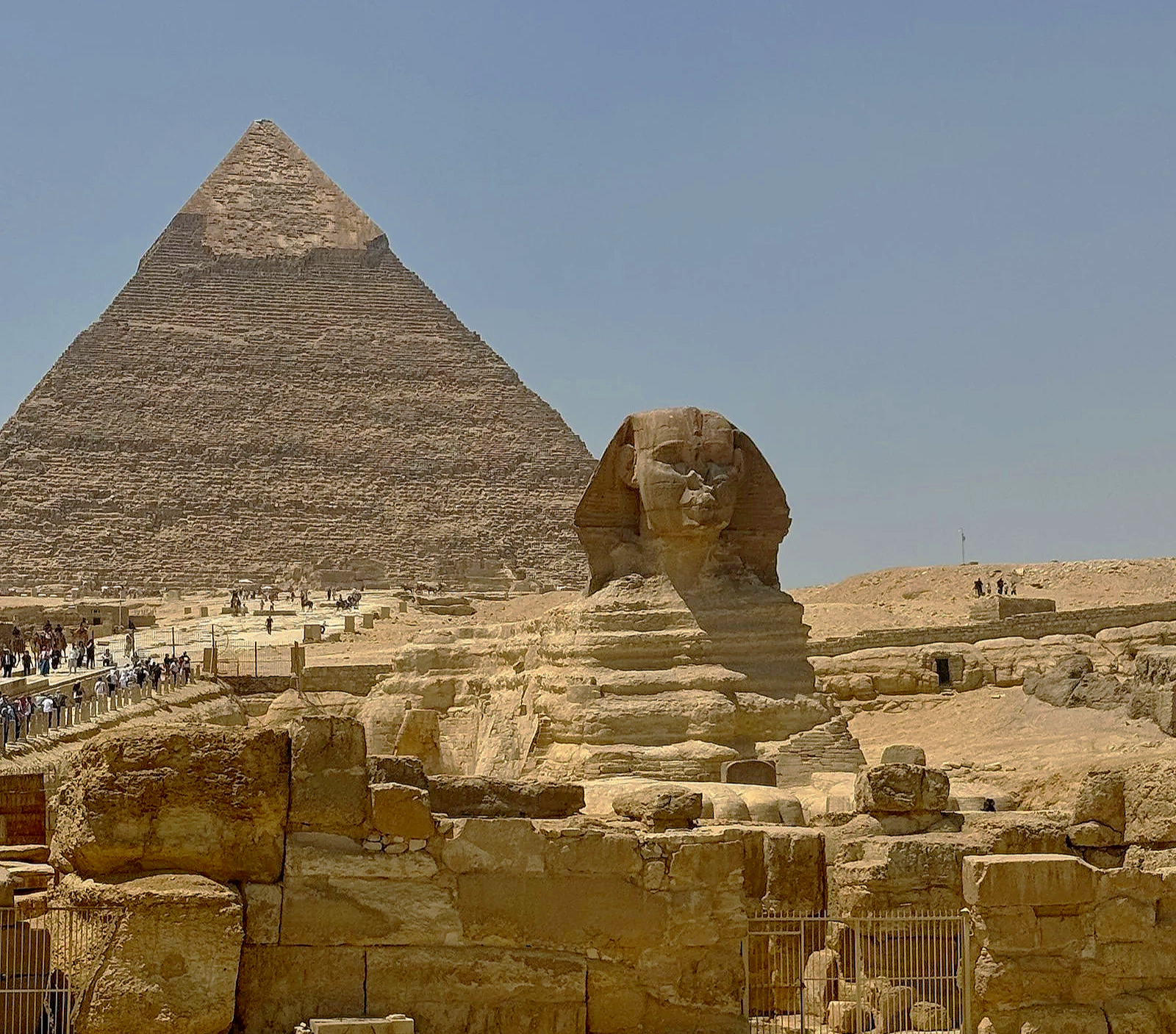
The Great Pyramids of Giza and the Sphinx
This is the moment.
The Great Pyramids of Giza rise out of the desert like something that shouldn’t exist—and yet, there they are. Solid. Immovable. Ancient in a way your brain struggles to process.
Standing there feels oddly grounding.
Nearby, the Great Sphinx of Giza watches quietly, as it has for around 4,500 years.
Lunch at Khufu’s Restaurant overlooking the pyramids (yes, it’s as surreal as it sounds), followed by a slow afternoon back at the hotel.
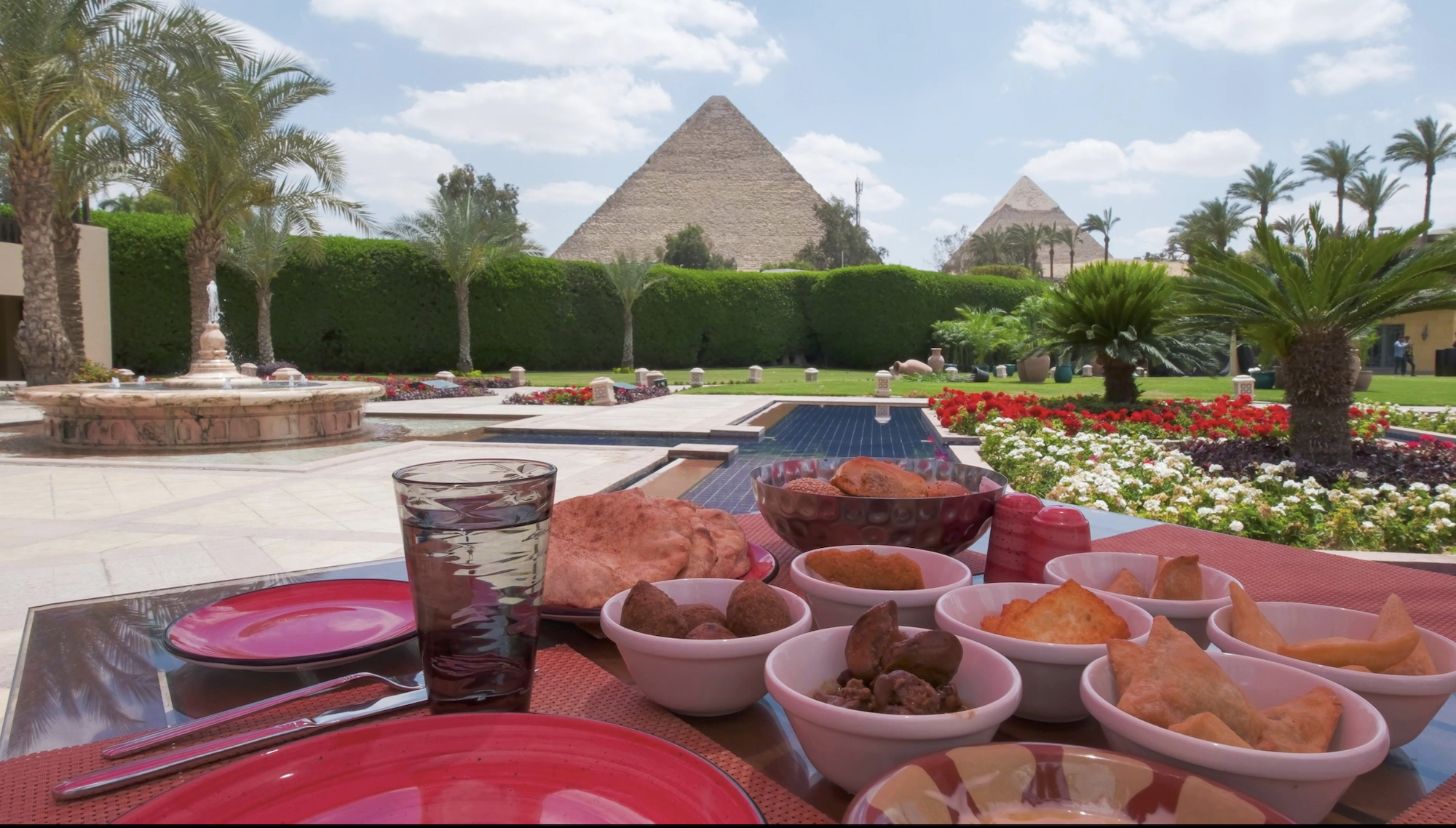
Khufu restaurant
Day 3: Cairo to Luxor + Karnak & Luxor Temples
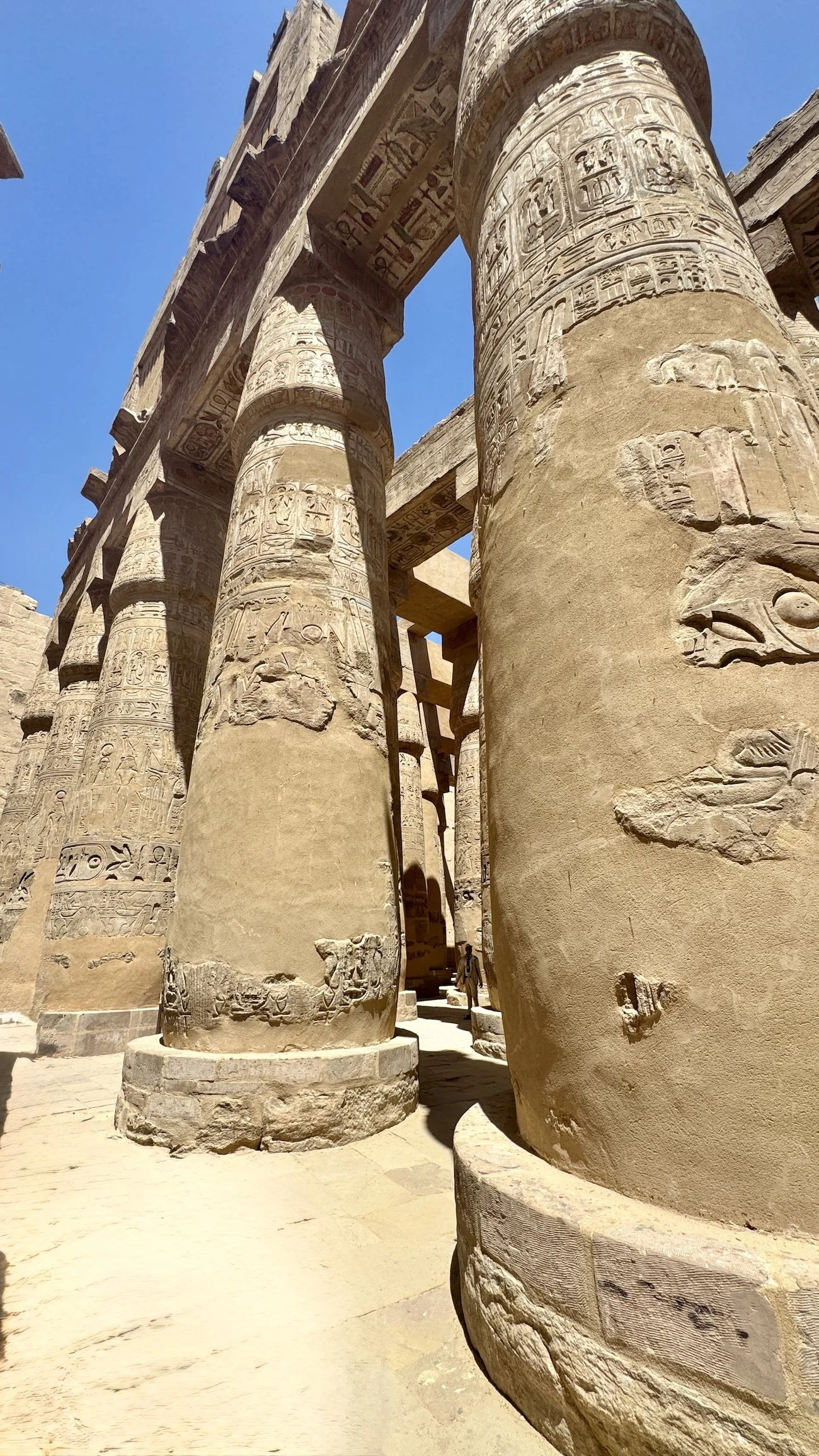
Karnak Temple
An early start, as we flew off to Luxor. This is where Egypt goes from impressive to overwhelming—in the best way. The Karnak Temple complex is vast, layered, and almost impossible to take in all at once.
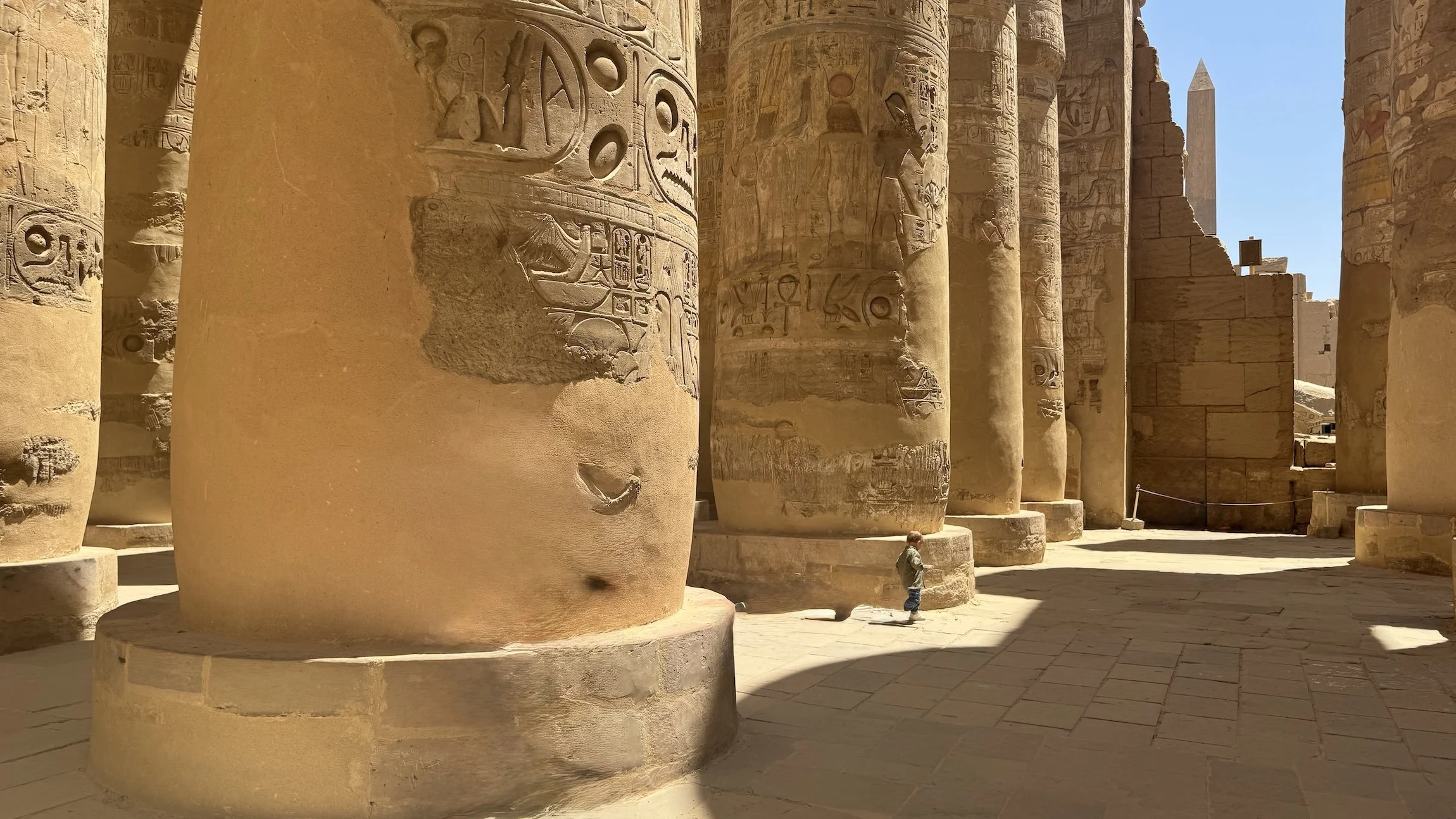
Karnak Temple
Luxor Temple
It heroically sits beside the Nile like an ancient warning. The scale is impossible to put into words.
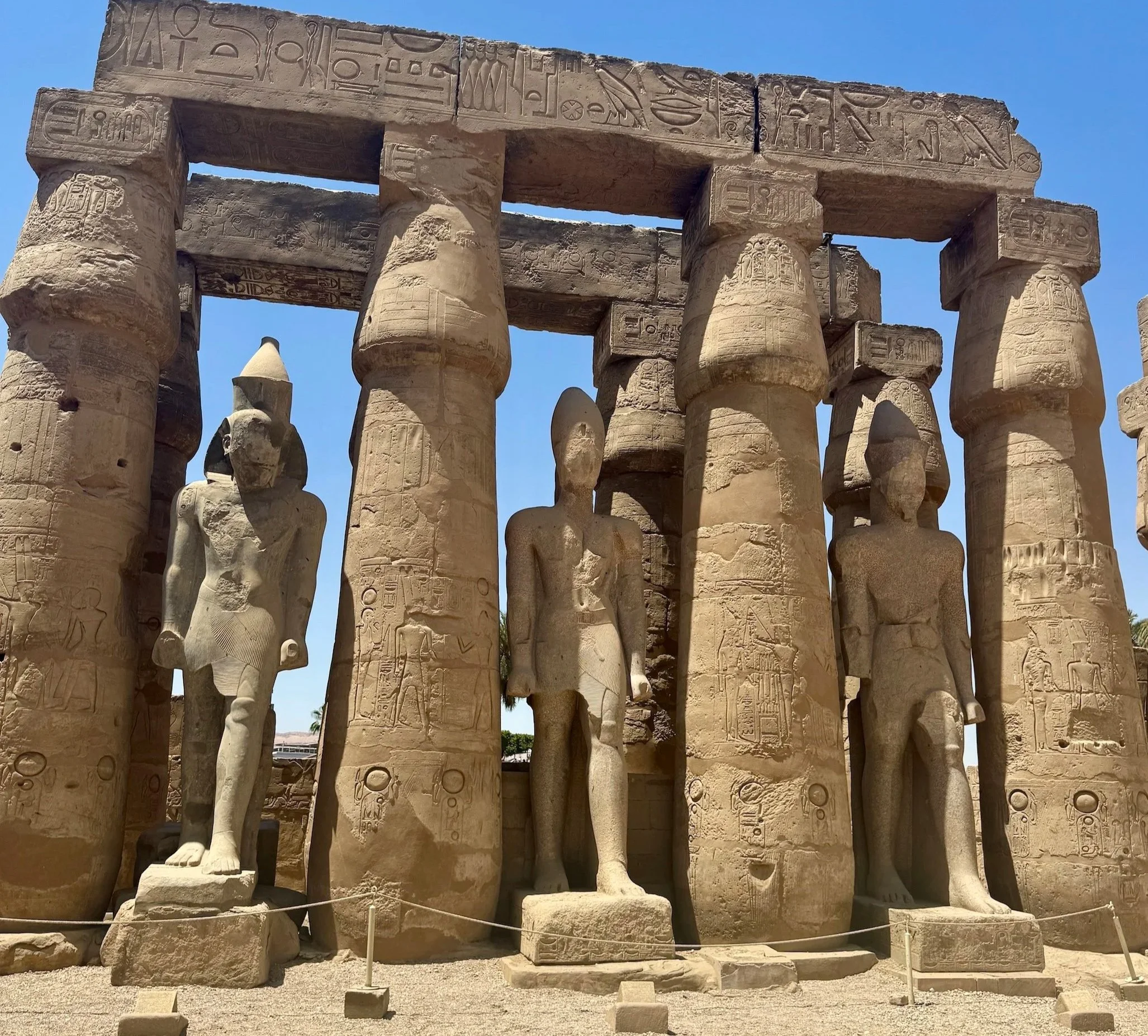
Luxor Temple
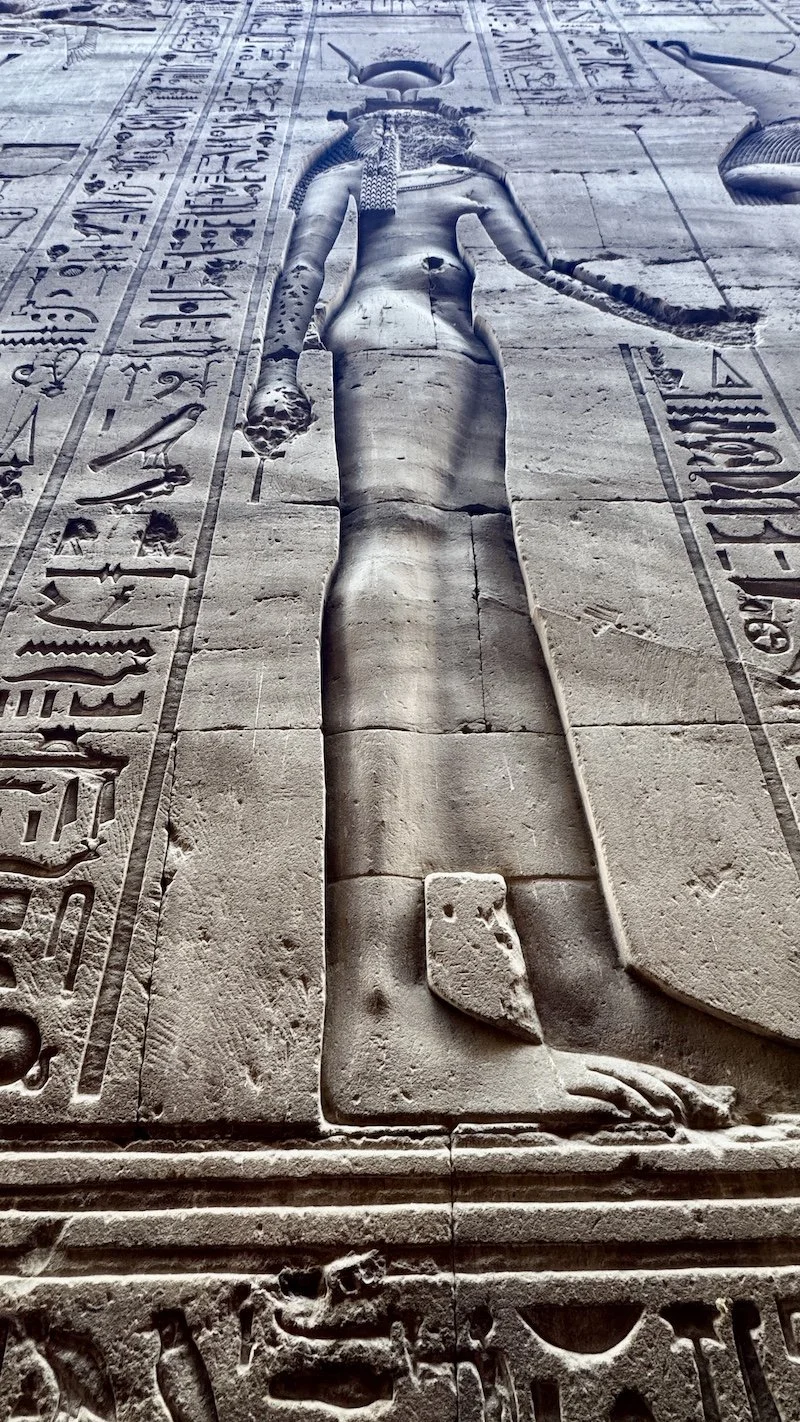
Carving on the walls of Luxor Temple
That evening, we boarded our four-night Nile cruise: The Soleil.
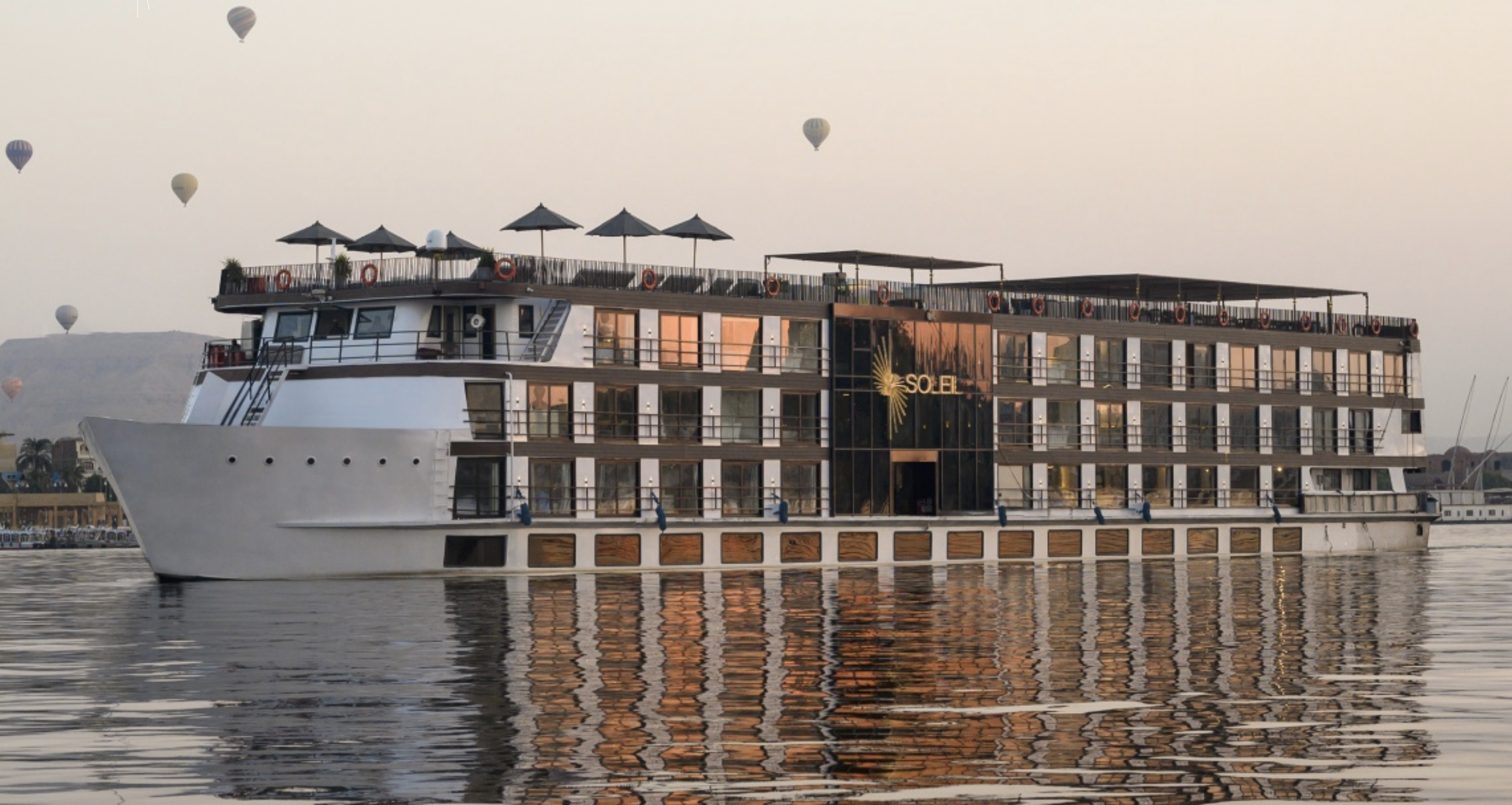
Soleil Nile River Cruise
A quick note on Nile cruises—most follow the same route. What changes is the level of luxury, service, and food. There’s something for every budget, so choose accordingly.

Bar, The Soleil Nile Cruise ship
Day 4: Hot Air Balloon + Valley of the Kings & Queens
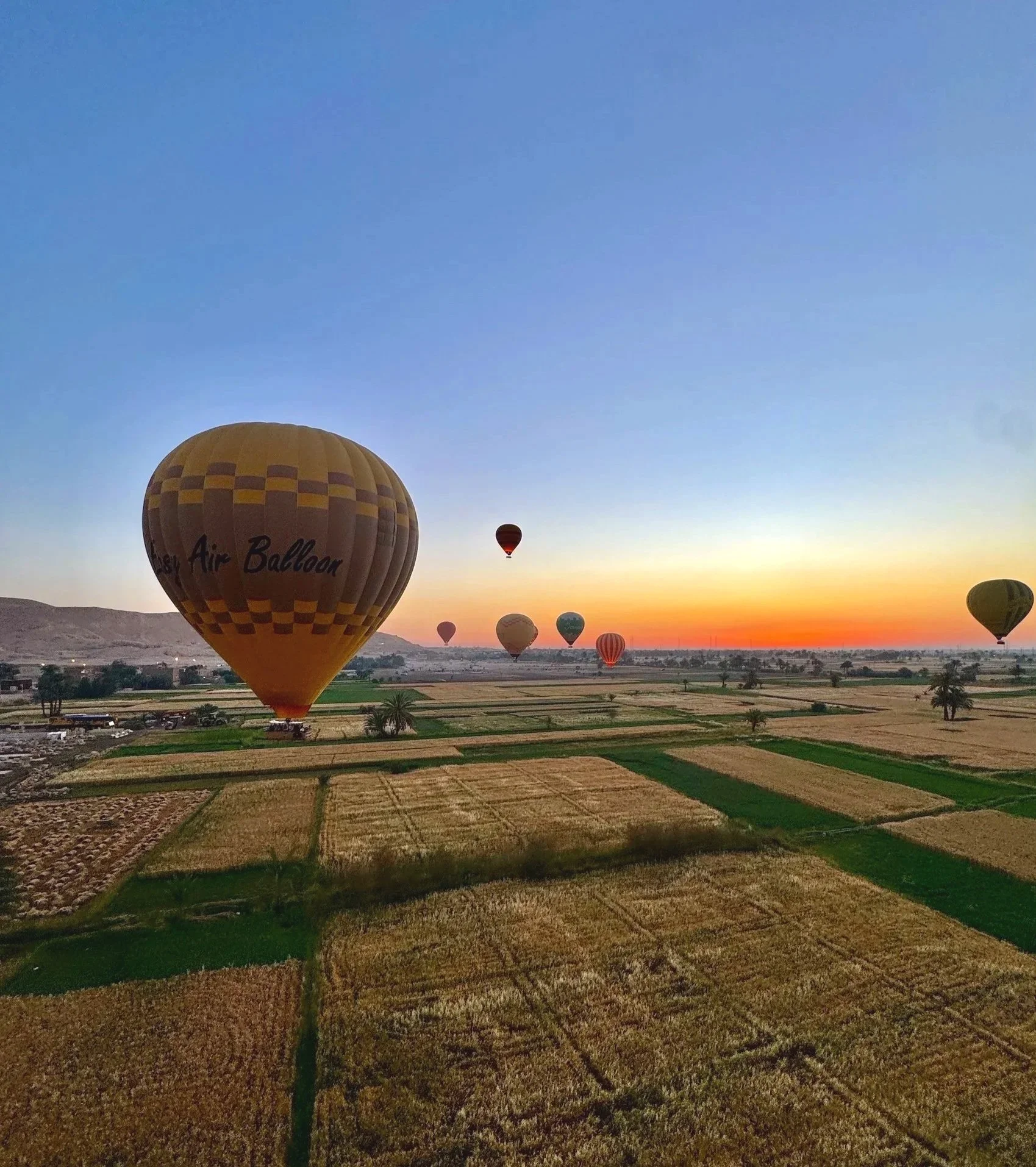
4:30am. Questionable life choices. Until…you see the balloons.

Hot air ballooning in Luxor, Egypt
Dozens of them, glowing against the pre-dawn sky. Floating over Luxor at sunrise felt unreal—temples, desert, and the Nile unfolding beneath you like a living map. Even if you’re afraid of heights, I’ll say this: do it anyway.
West Bank. Valley of the Kings
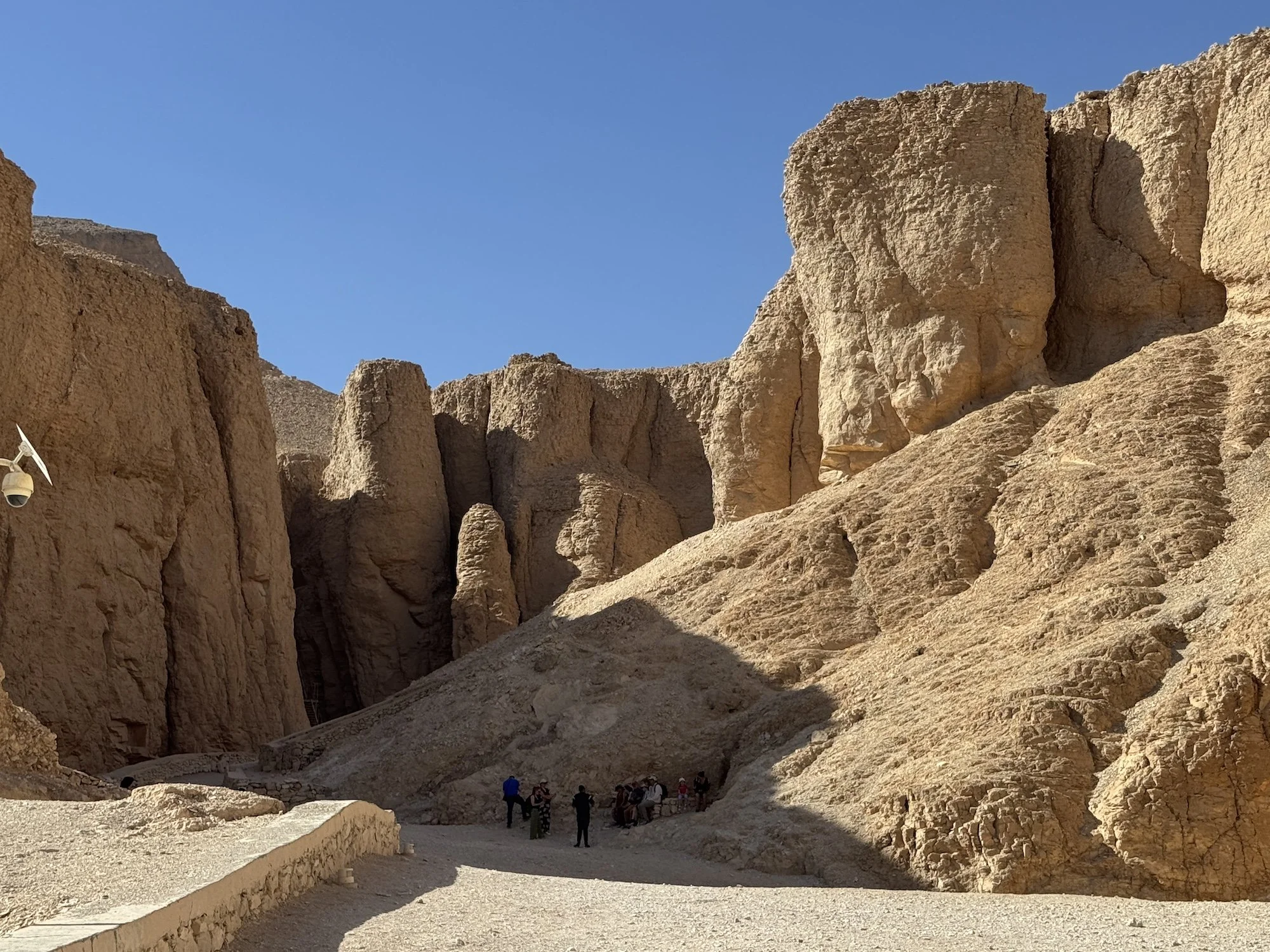
Valley of the Kings
The Valley of the Kings is where Egypt becomes cinematic—hidden tombs, painted walls, and history that still feels alive. The tomb of Seti I was a standout, with intricate hieroglyphics and carvings that felt impossibly detailed.
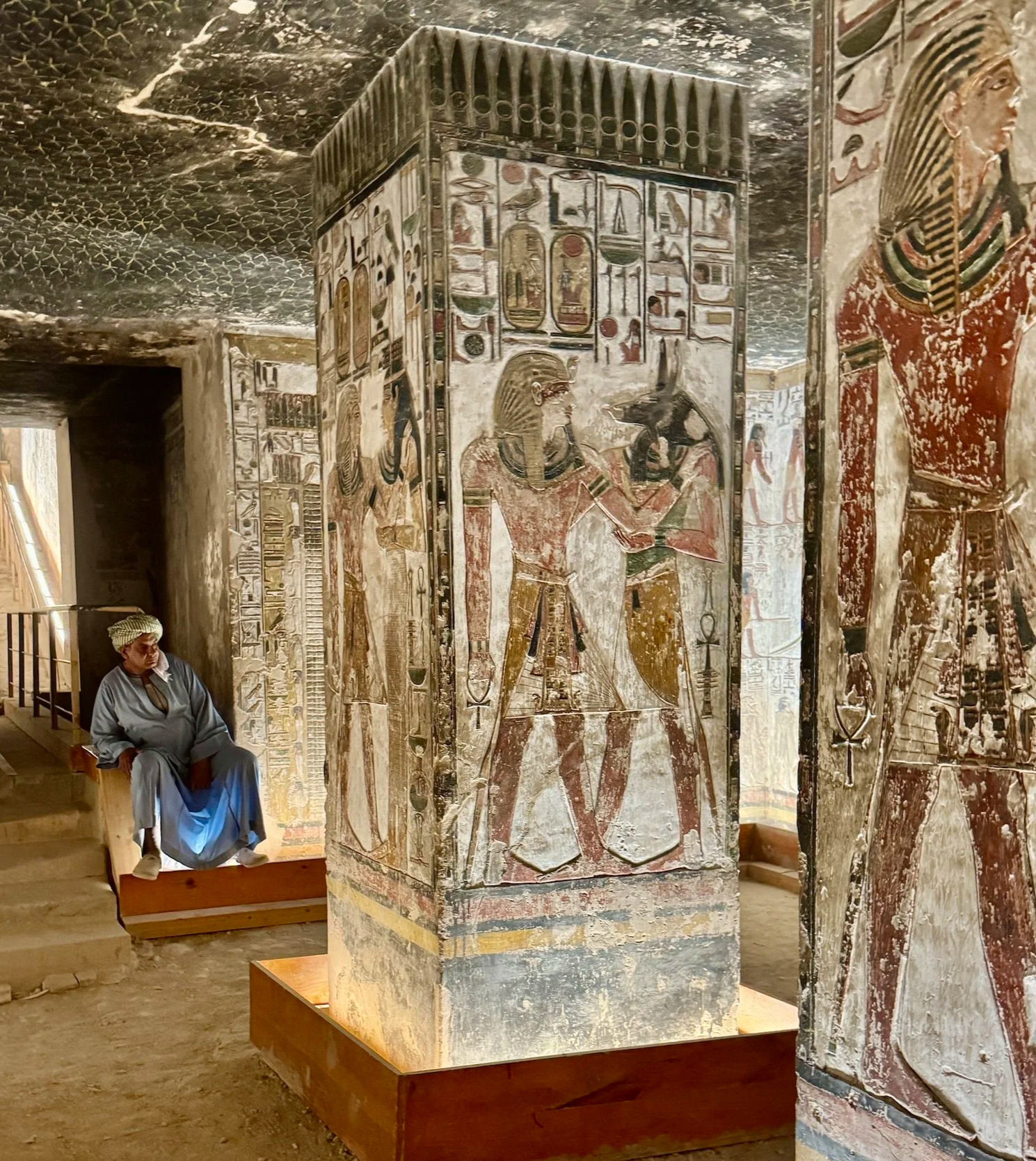
Guarding the Pharaoh’s tomb
And of course, there’s the most famous Pharaoh, Tutankhamun. His tomb, discovered in 1922, is the most intact royal tomb ever found. His mummified body remains here in the valley, as it was too fragile to move and is definitely worth a squeamish look.
We then visited the Valley of the Queens, the burial site of royal women, including the famous tomb of Queen Nefertari. The Mortuary Temple of Hatshepsut was dramatically carved into the cliffs. We stopped and bought a little bit of alabaster from local artisans.
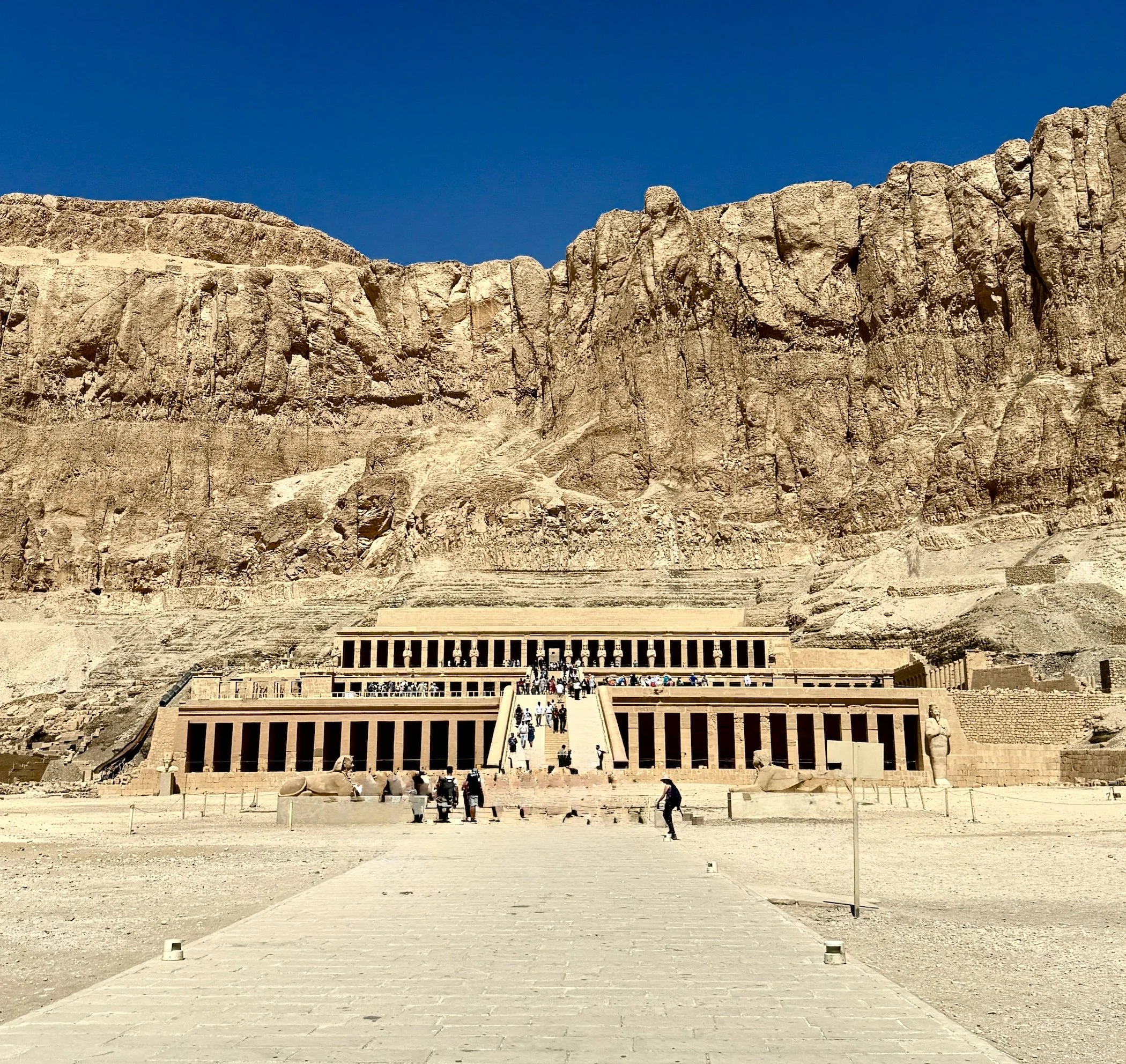
Valley of the Queens
Day 5: Edfu & Kom Ombo Temple
A morning horse and carriage ride took us to the Temple of Edfu, dedicated to the falcon-headed god Horus. The scale, once again, is extraordinary.

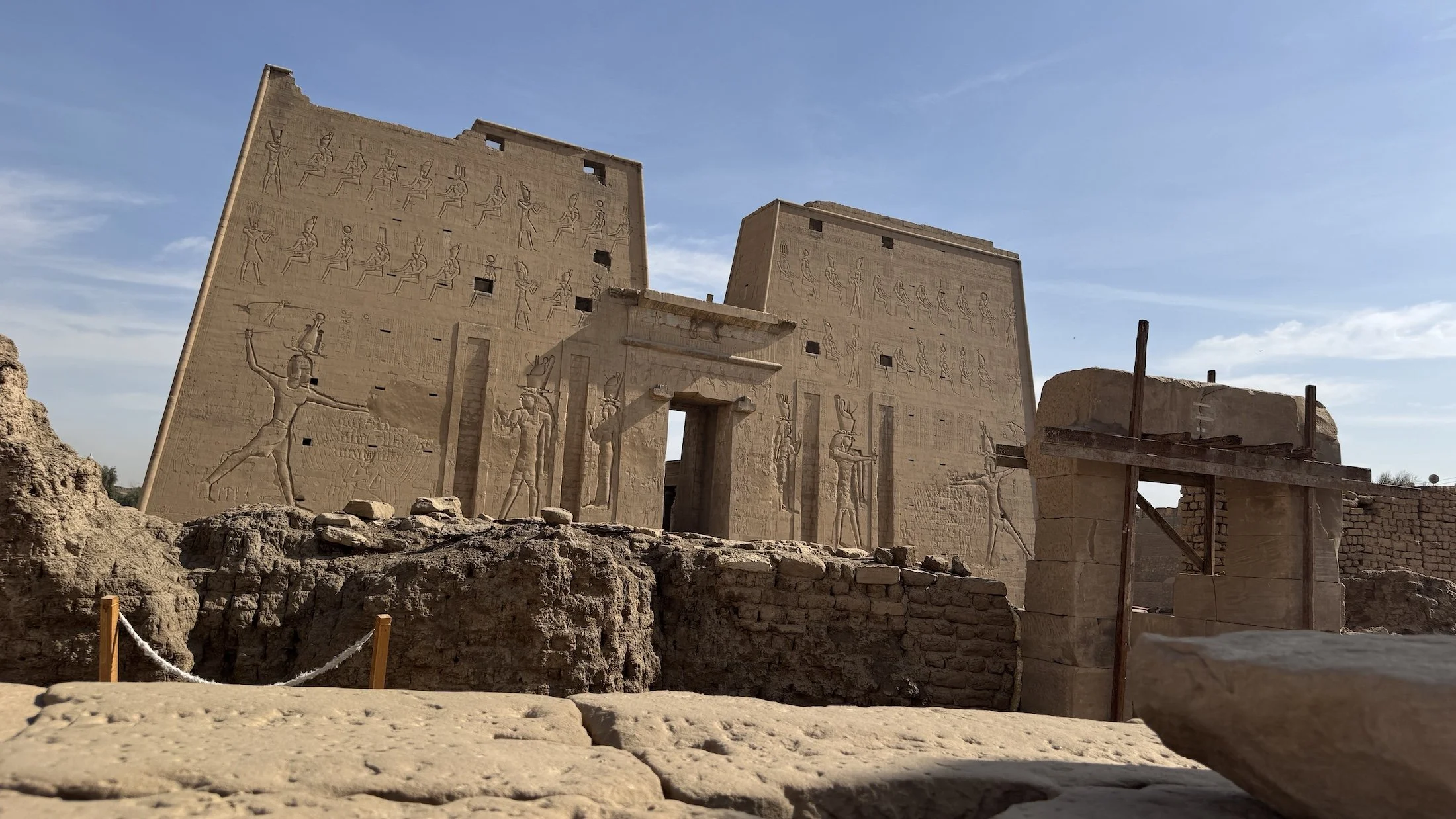
Temple of Edfu
The afternoon we enjoyed the slowed down pace—sun, pool, and the gentle rhythm of the Nile.
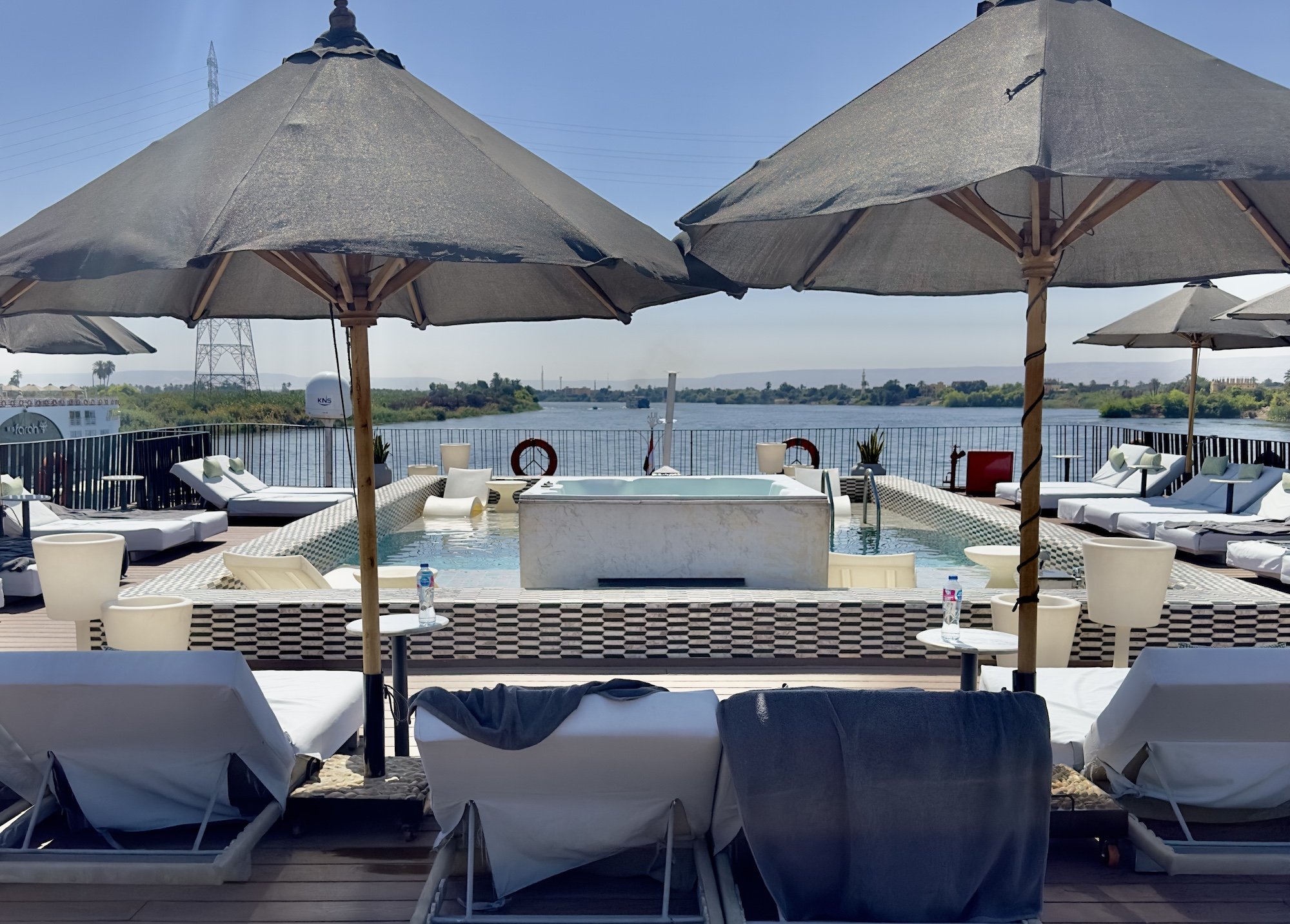
Poolside on The Soleil Nile cruise.
Temple of Kom Ombo
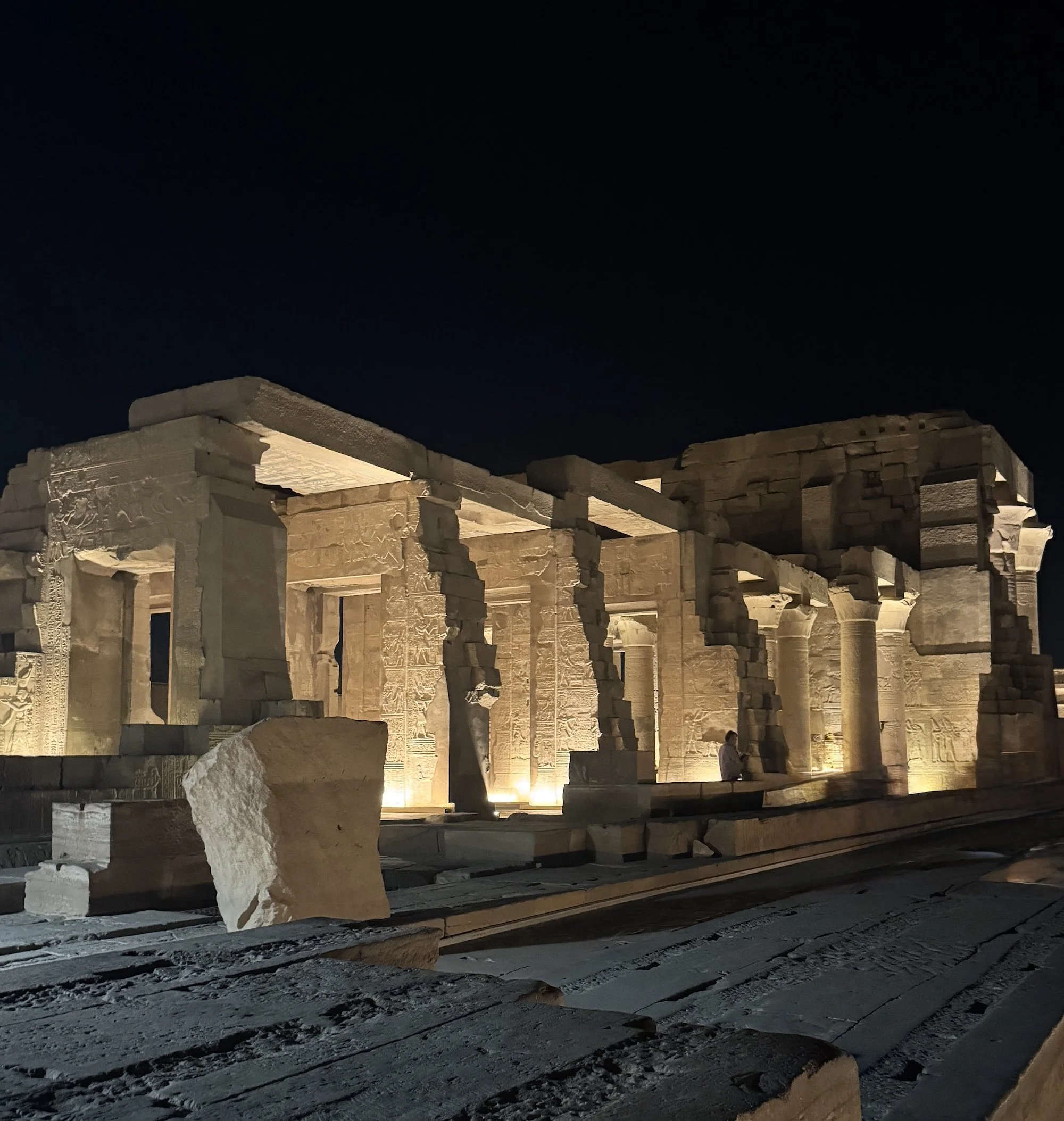
Temple of Kom Obmo
That evening we strolled to the Temple of Kom Ombo. It glowed along the Nile. Magic. And yes, there’s a crocodile museum, home to ancient mummified crocodiles. Egypt does not do subtle.
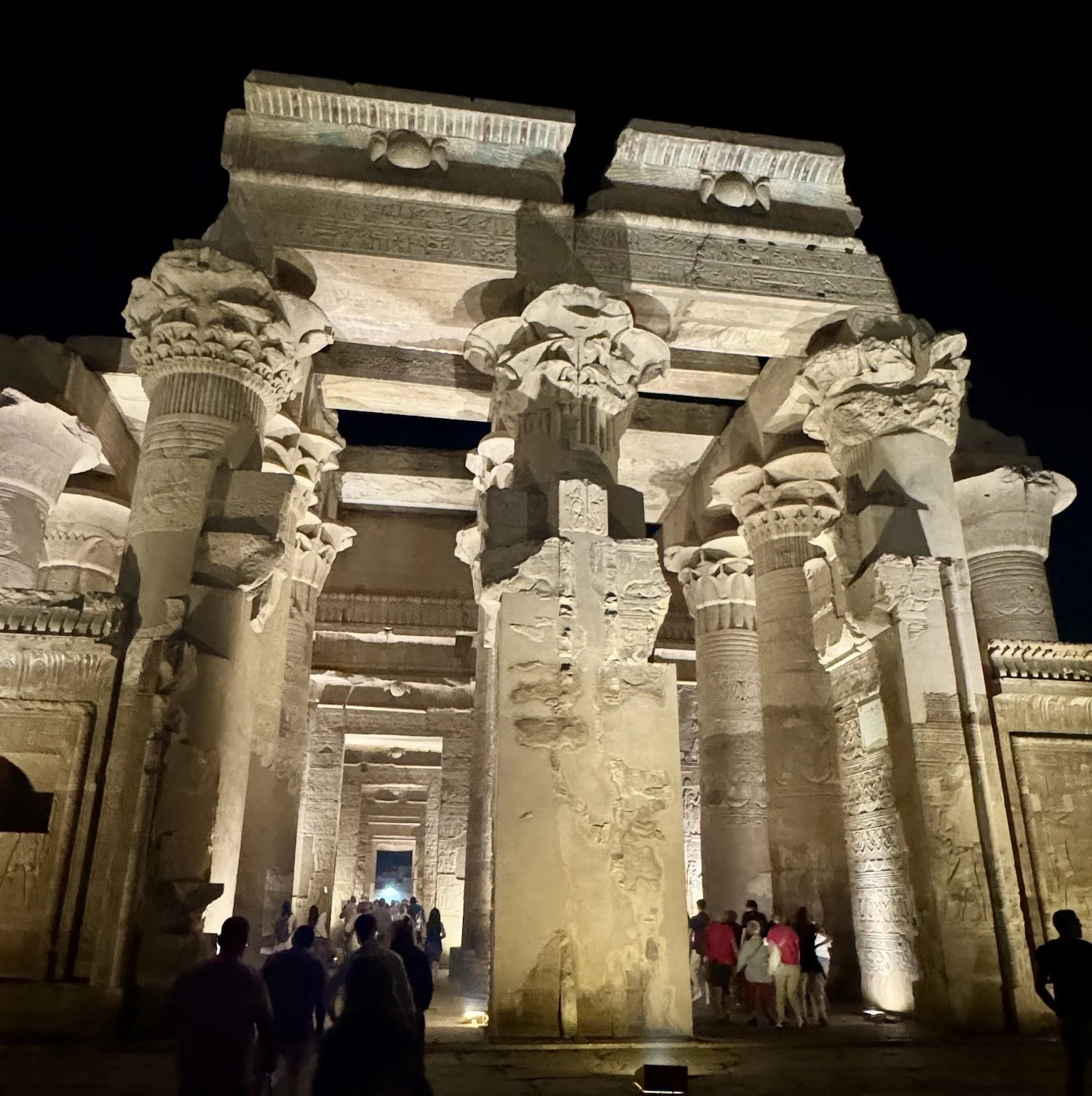
Temple of Kom Obmo
Day 6: Abu Simbel & Nubian Village
I almost skipped Abu Simbel. Why? It required a flight, and flying isn’t exactly my favourite thing. But I asked myself, what would I do if I wasn’t afraid? So I went. And I’m so very, very glad I did.
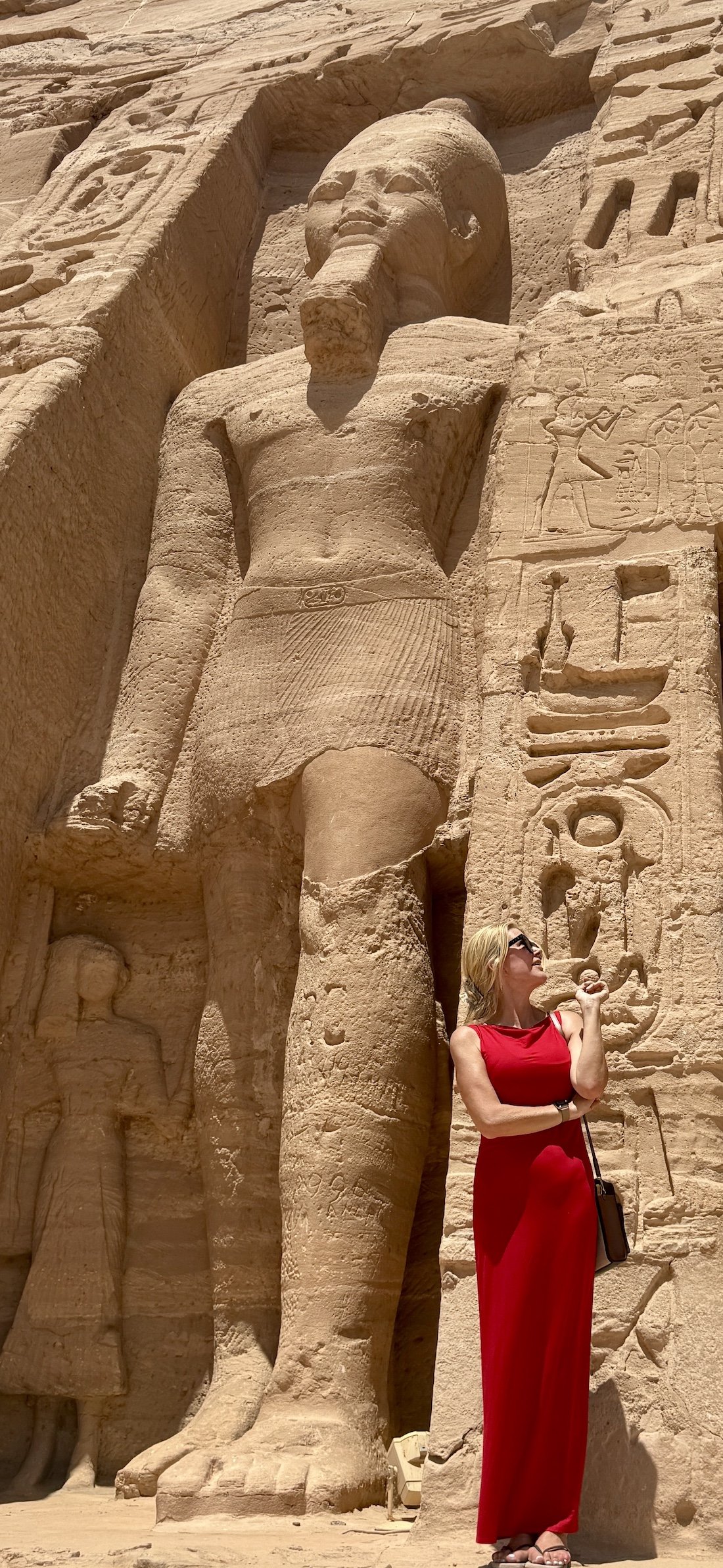
Abu Simbel Temple
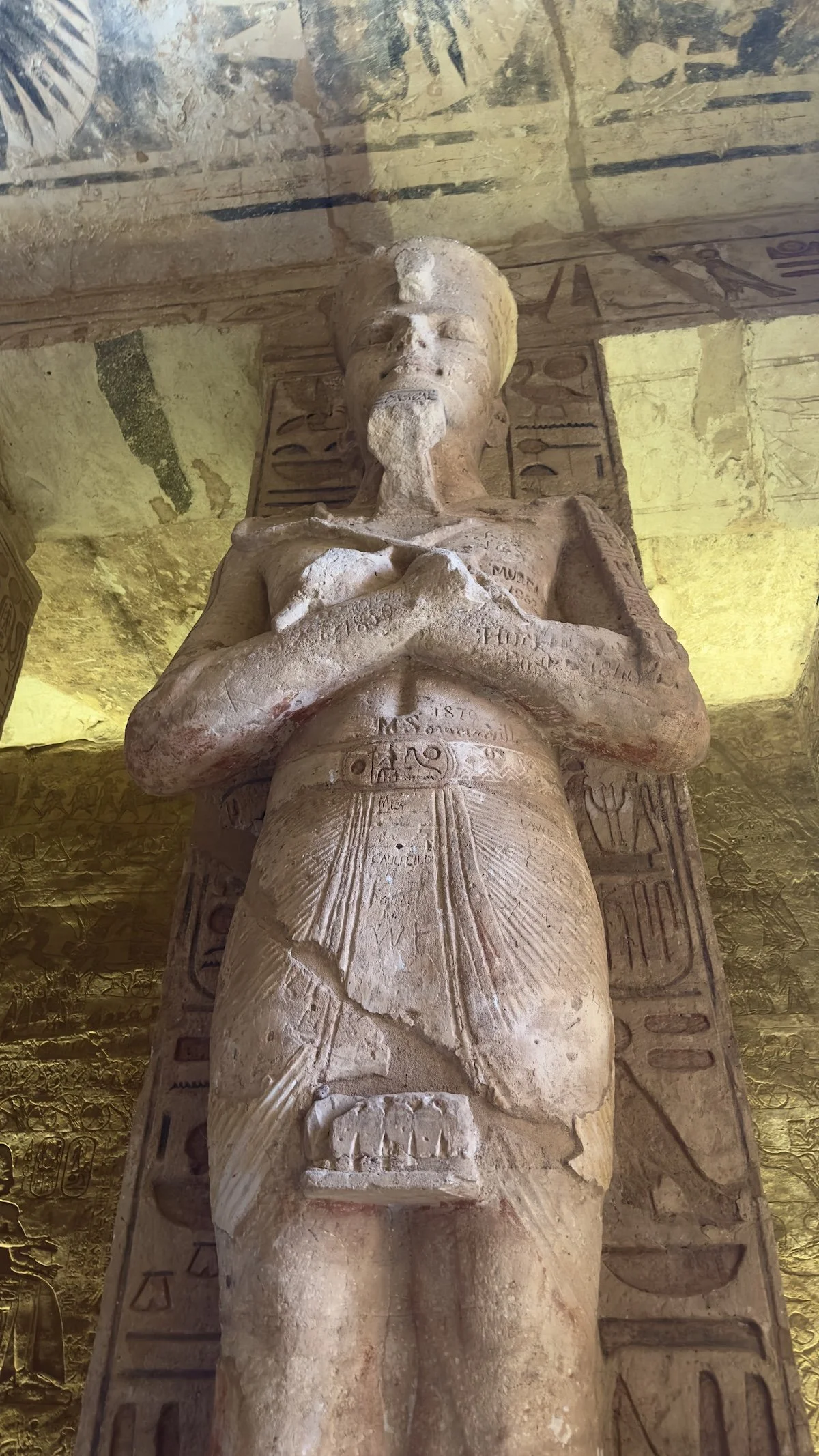
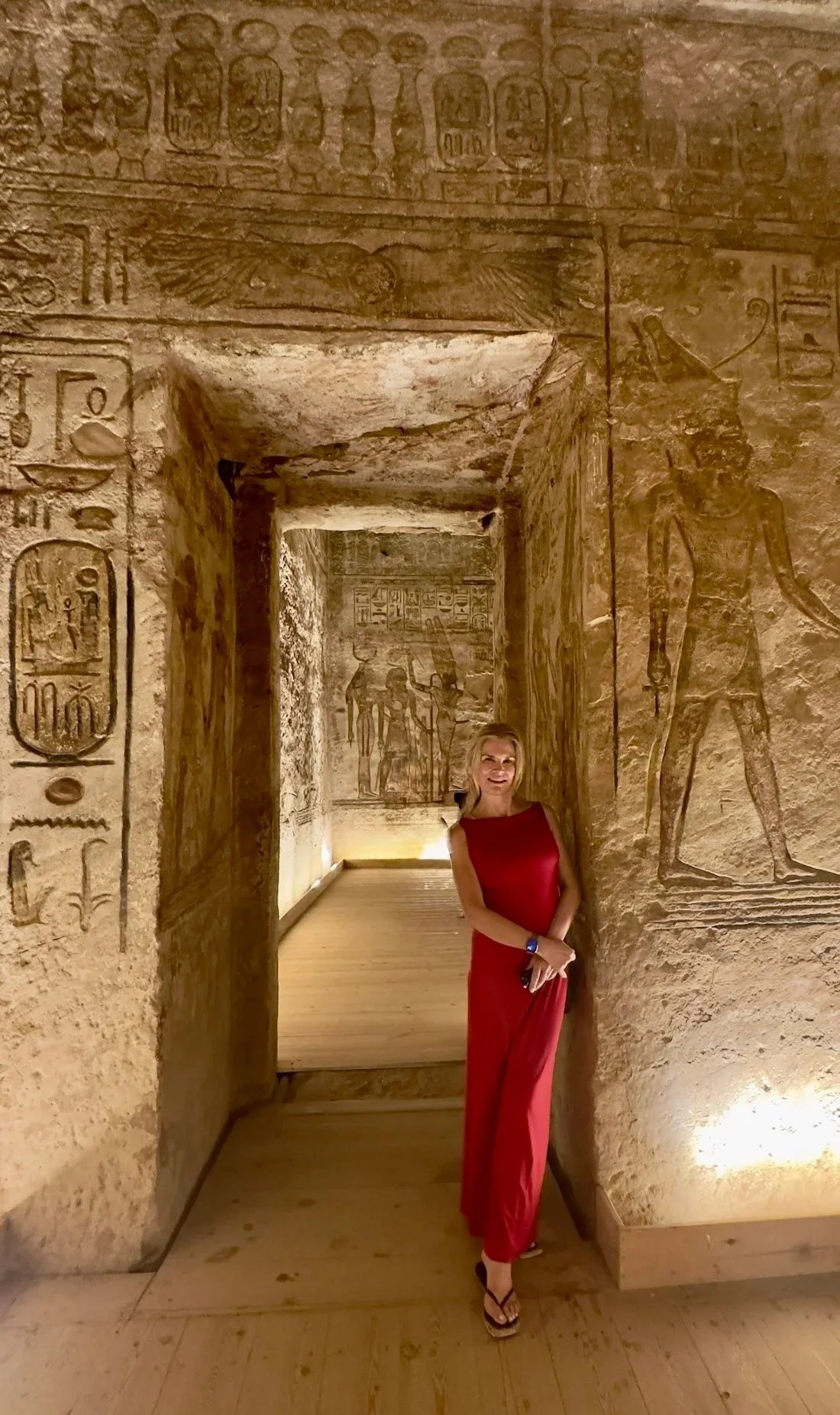
Interior Temple Abu Simbel
The temples of Ramesses II at Abu Simbel are jaw-dropping. Remote, dramatic, and completely unforgettable. An absolute must-see. The entire complex was relocated stone by stone during a UNESCO rescue project to protect it from the rising waters of Lake Nasser, which is known to be home to thousands of Nile crocodiles.
Nubian Village
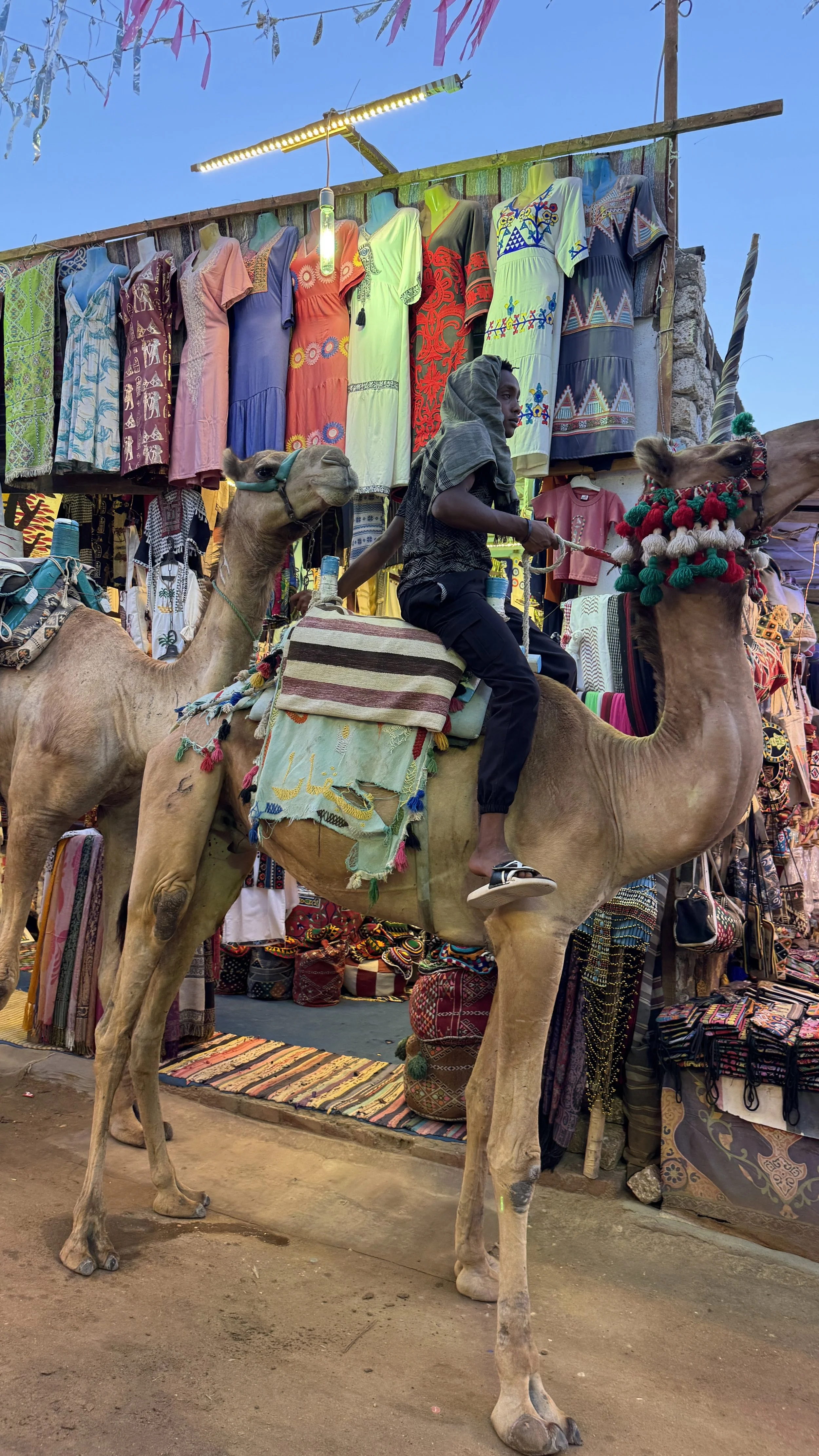
Later that day, we took a scenic boat ride to visit a Nubian village. This was charm on a whole other level. Bright colors. Warm welcomes. Children practicing their English with smiles that could disarm anyone.
Camels and colorful stalls lined the dirt streets. We visited a Nubian home where three generations lived together… alongside two pet crocodiles. Yes. Really.
This might not an obvious Egyptian ‘must-see’, but I am telling you, there is no way you want to miss it.
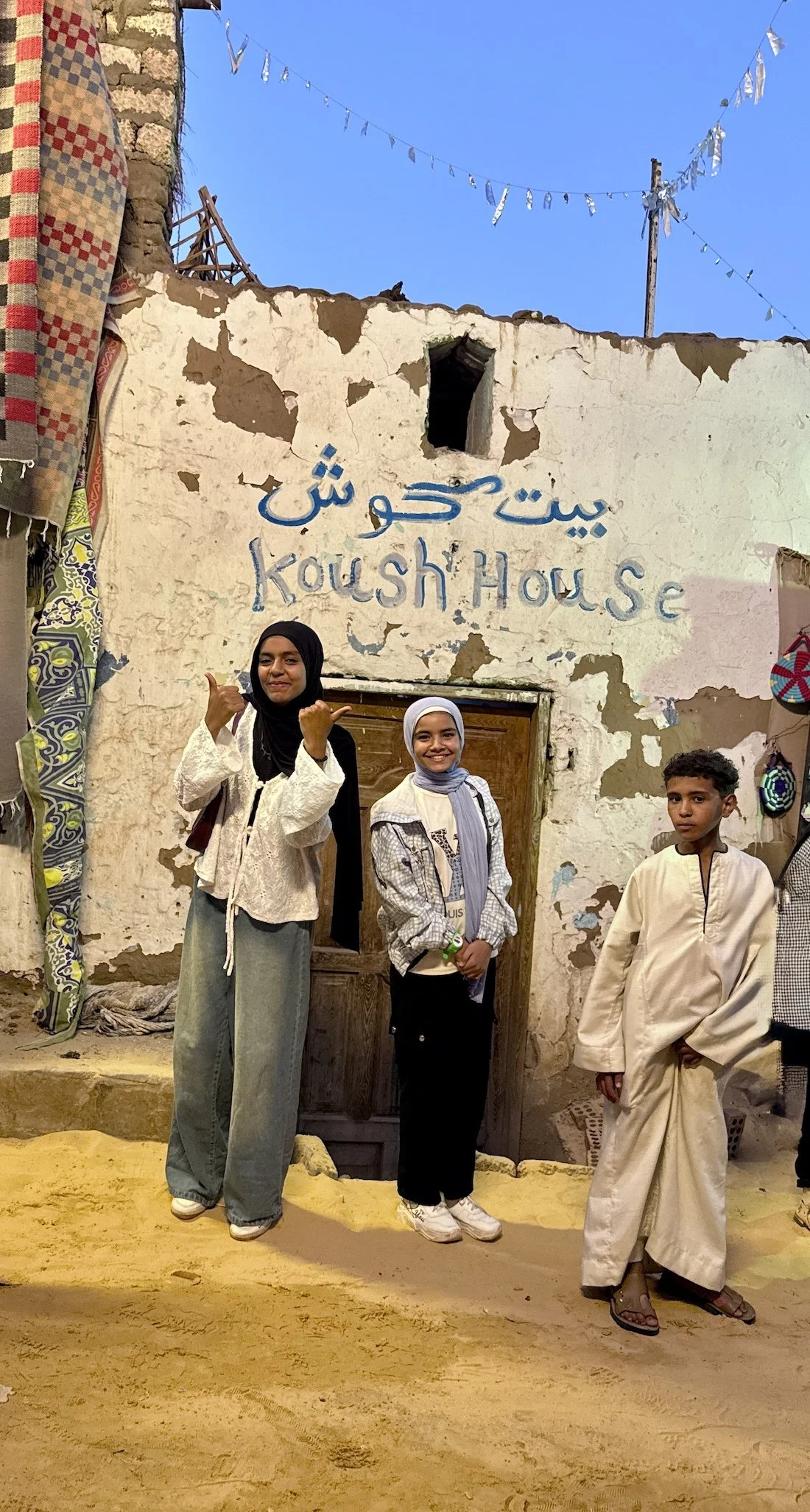
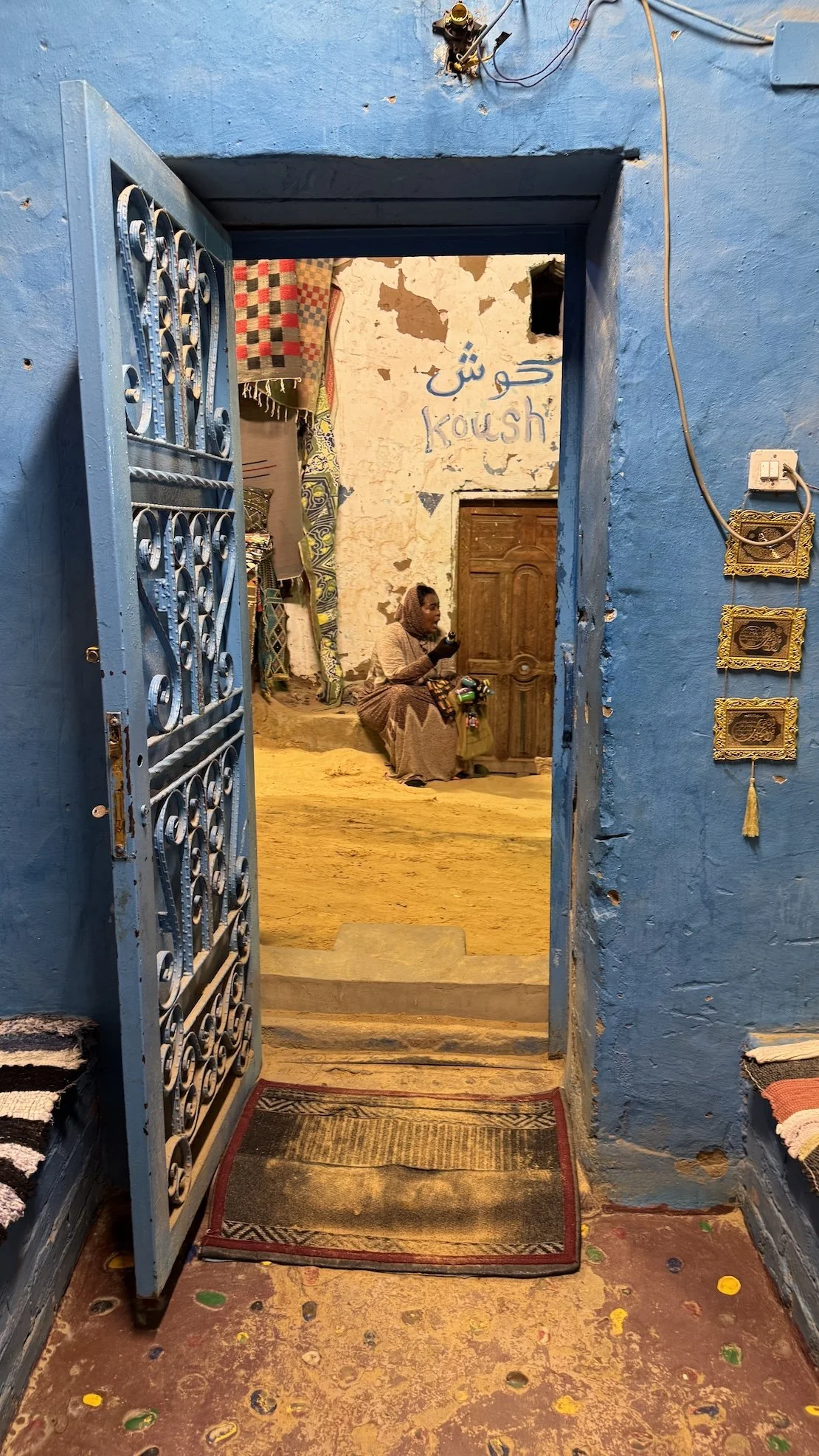
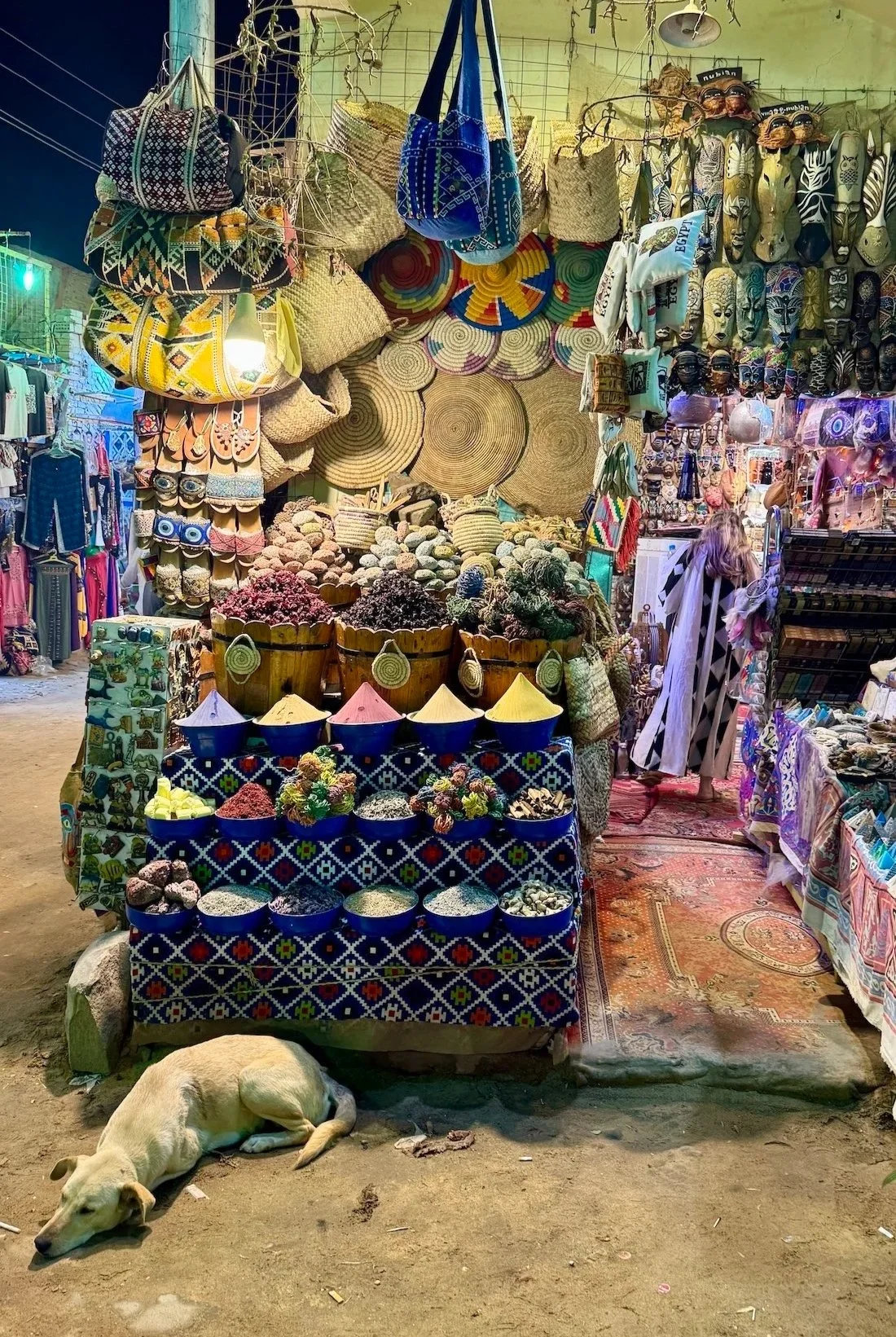
Market stall in Nubian Village
DAY 7 - Aswan + Philae Temple
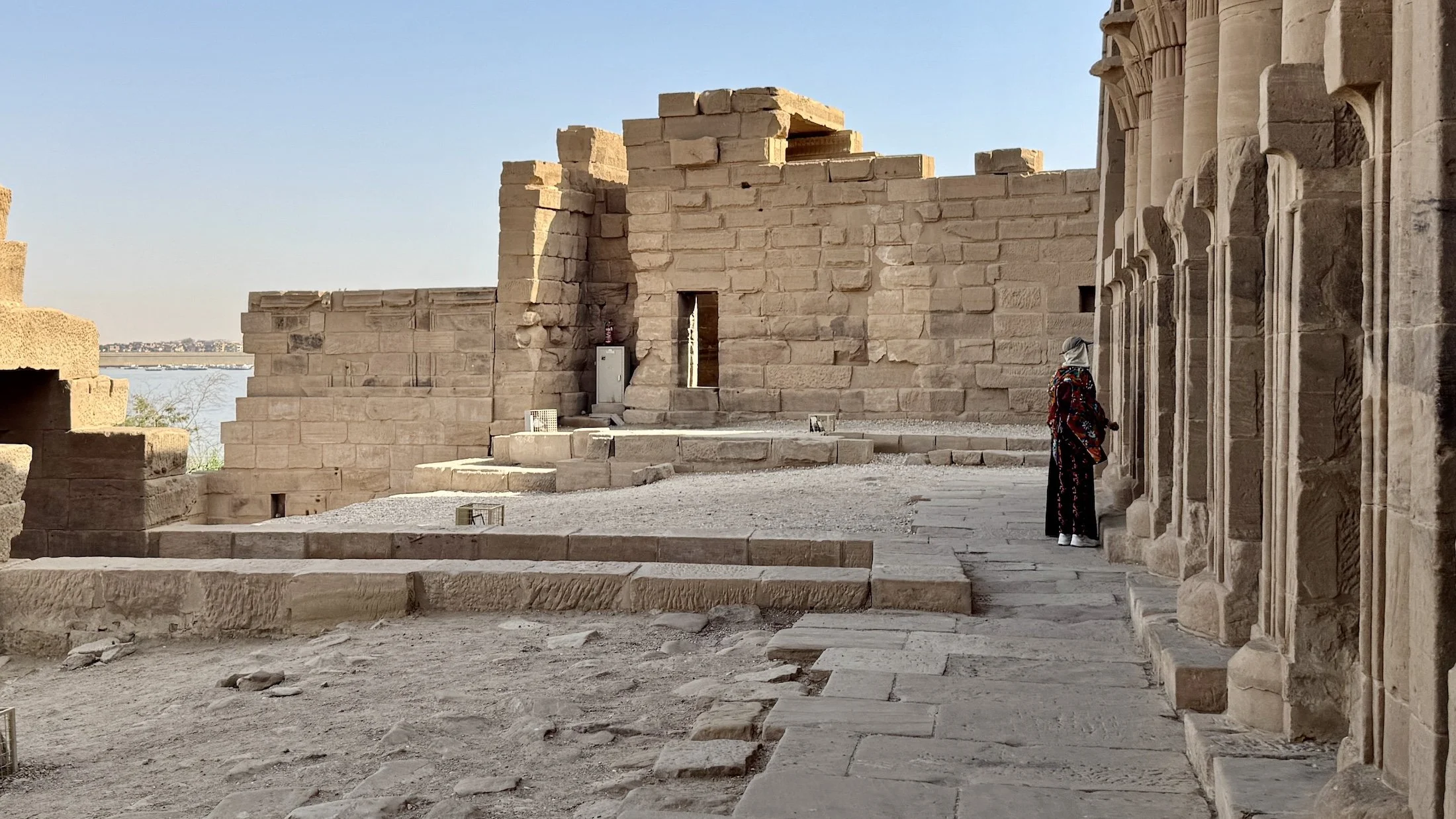
Philae Temple
We said farewell to our Nile cruise and arrived in Aswan. Aswan feels different. Quieter. Softer. Almost like Egypt exhaling.
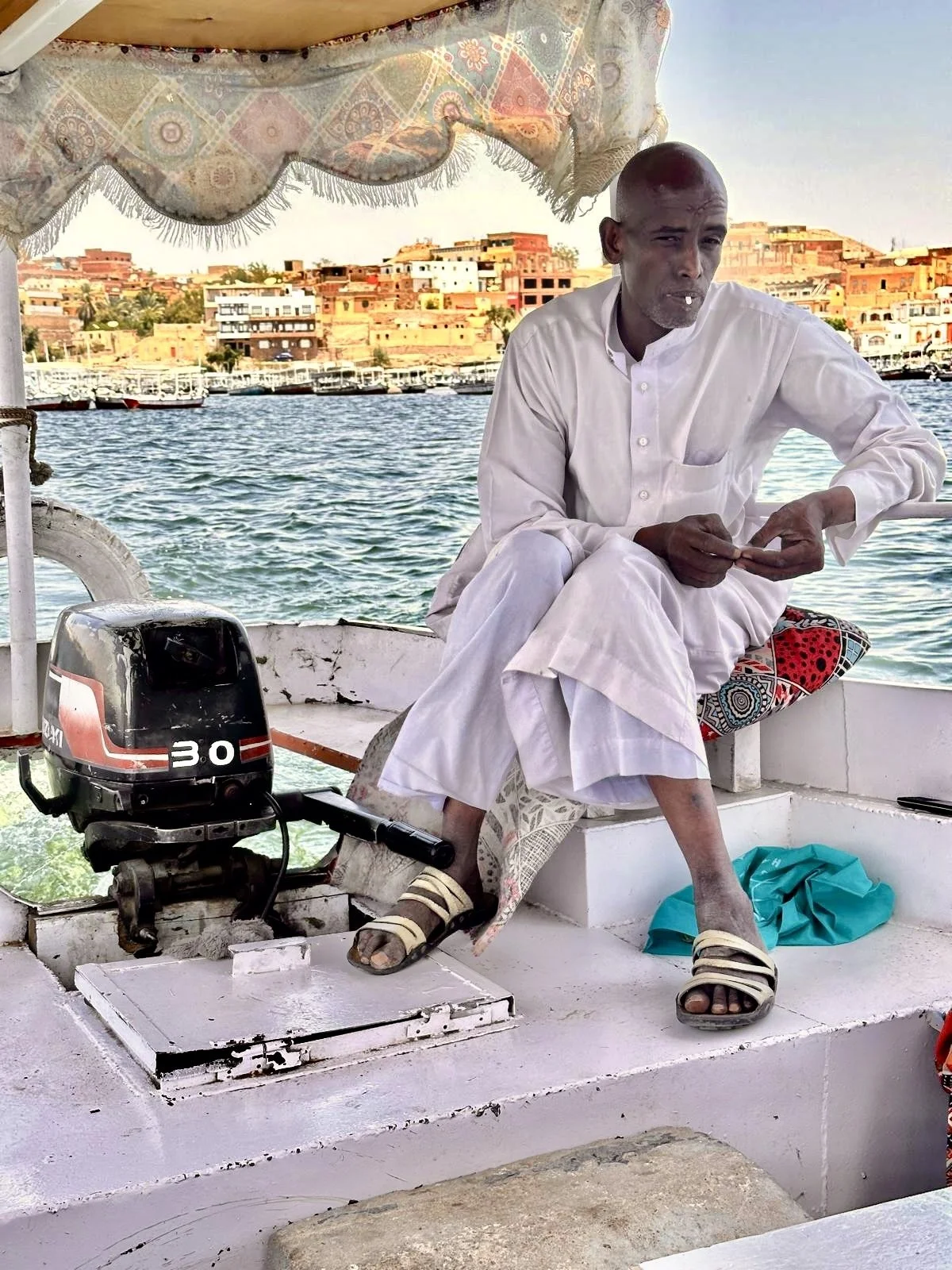
We took a boat to the Philae Temple, dedicated to Isis, carefully relocated to Agilkia Island to save it from rising waters.
That night, we stayed at BenBen by Dhara Hotels, nestled on the Nubian island of Heissa, overlooking the Nile and the temple. A small note: the hotel is alcohol-free. And yet… we managed. Kinda.
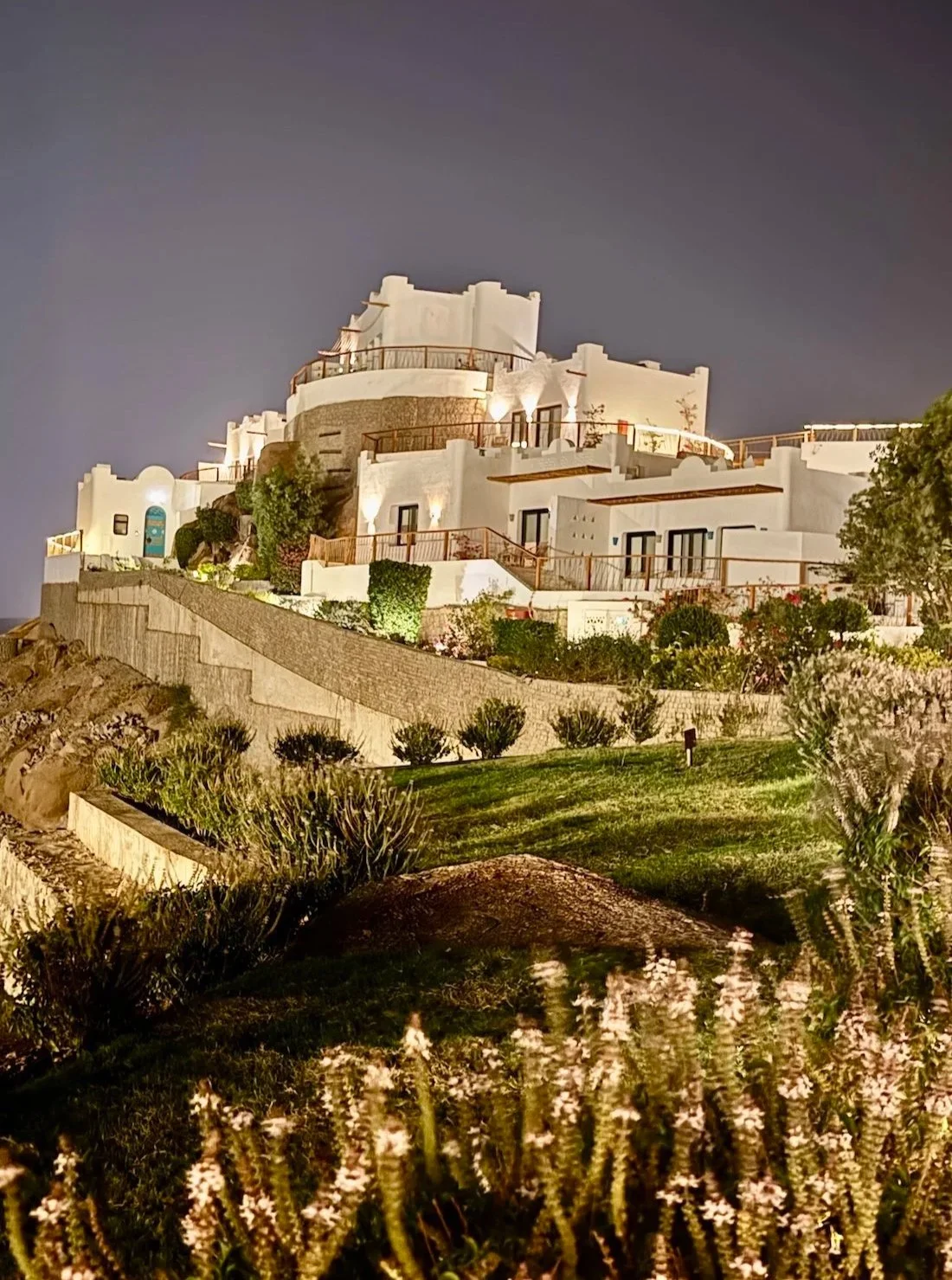
Hotel BenBen, Aswan, Egypt
Day 8–9: Return to Cairo + Culture & Shopping
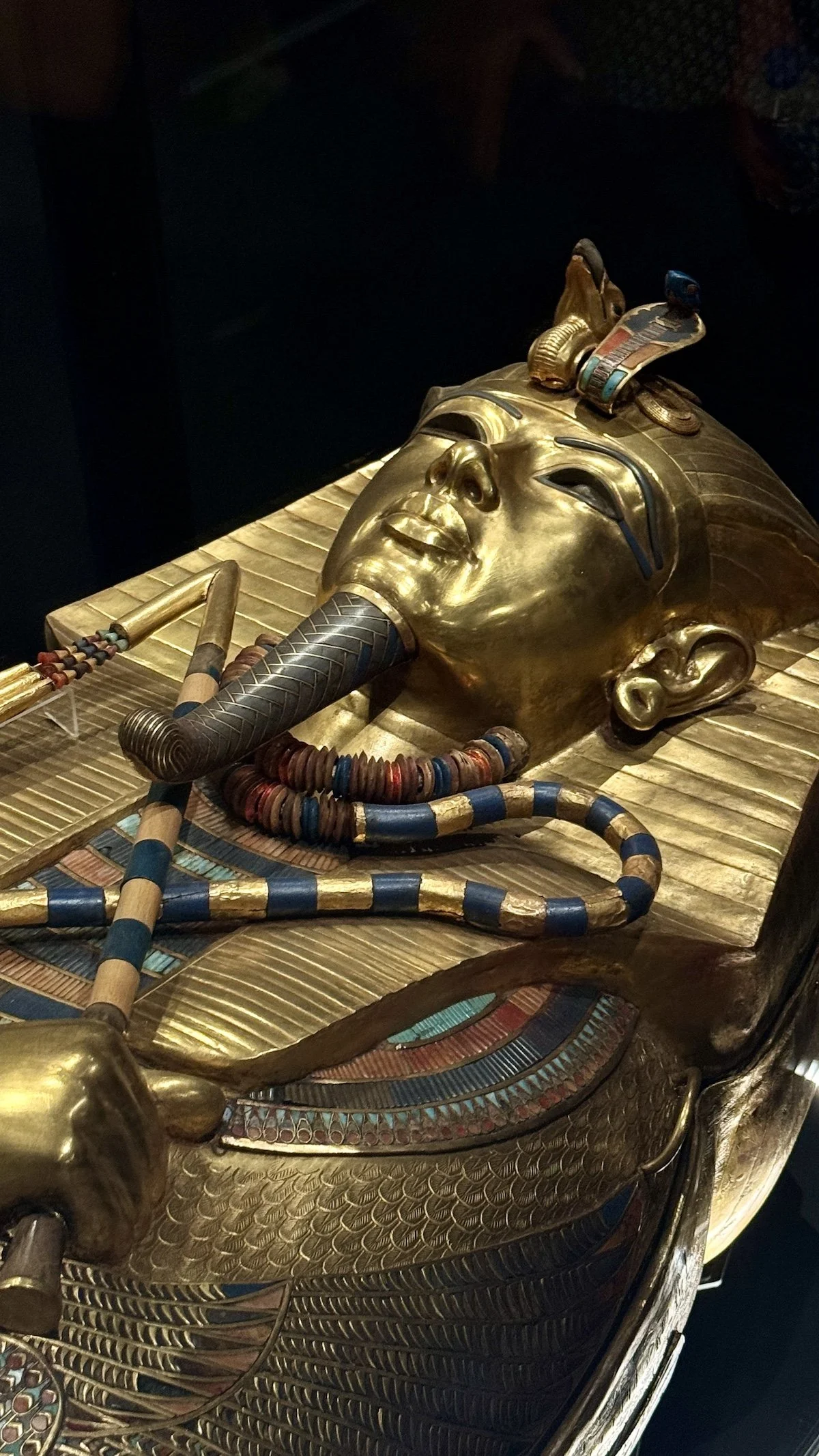
Back in Cairo, we visited the National Museum of Egyptian Civilization, home to the Royal Mummies.
Then Coptic Cairo, where narrow streets and ancient churches and synagogs tell a quieter story of the city.
Finally, the Grand Egyptian Museum—the largest archaeological museum in the world dedicated to a single civilization. This is where everything comes together, including the treasures of Tutankhamun.
Where to Shop in Cairo (and What to Buy)
Khan el-Khalili Market, Cairo
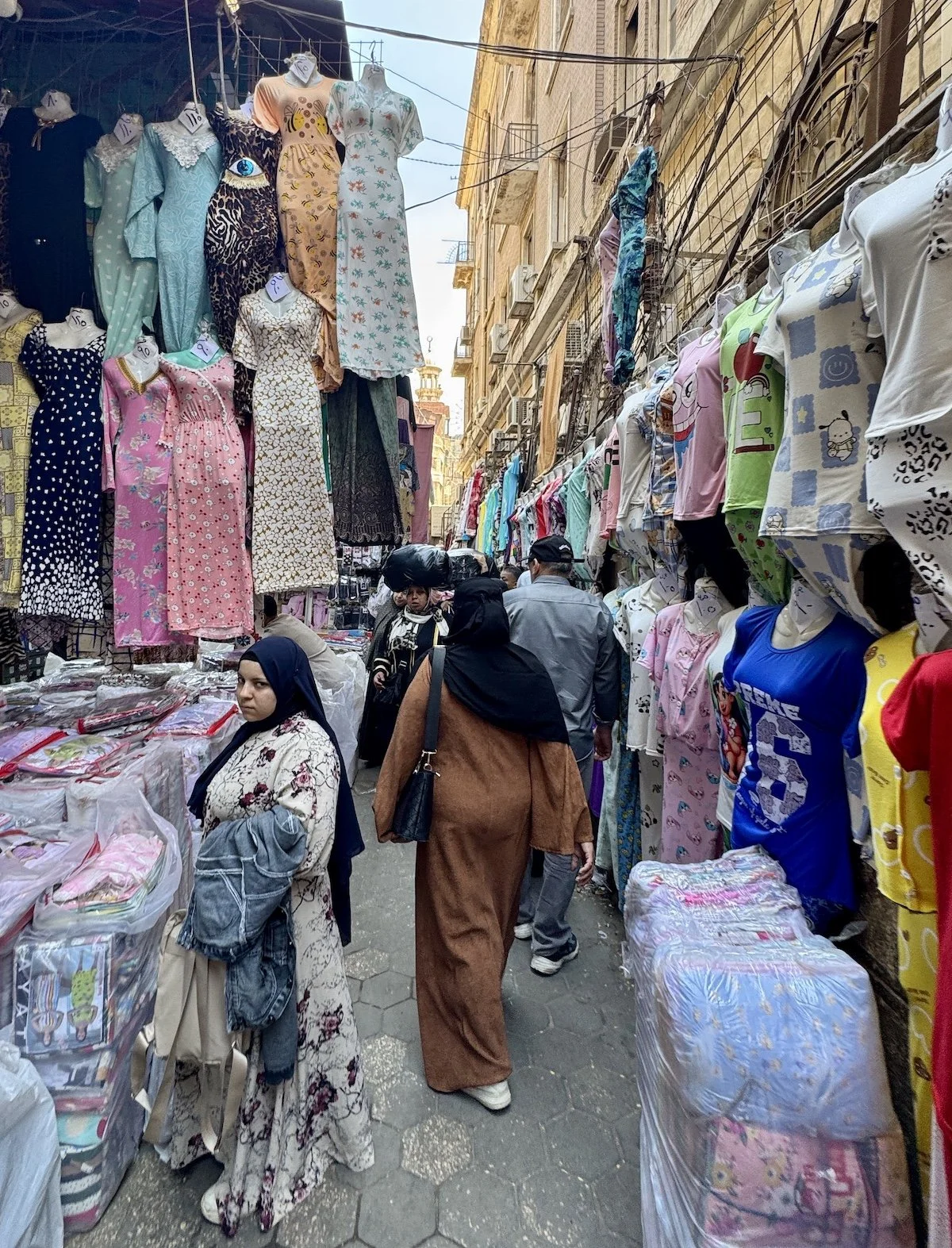
Woman in Khan el-Khalili Market, Cairo
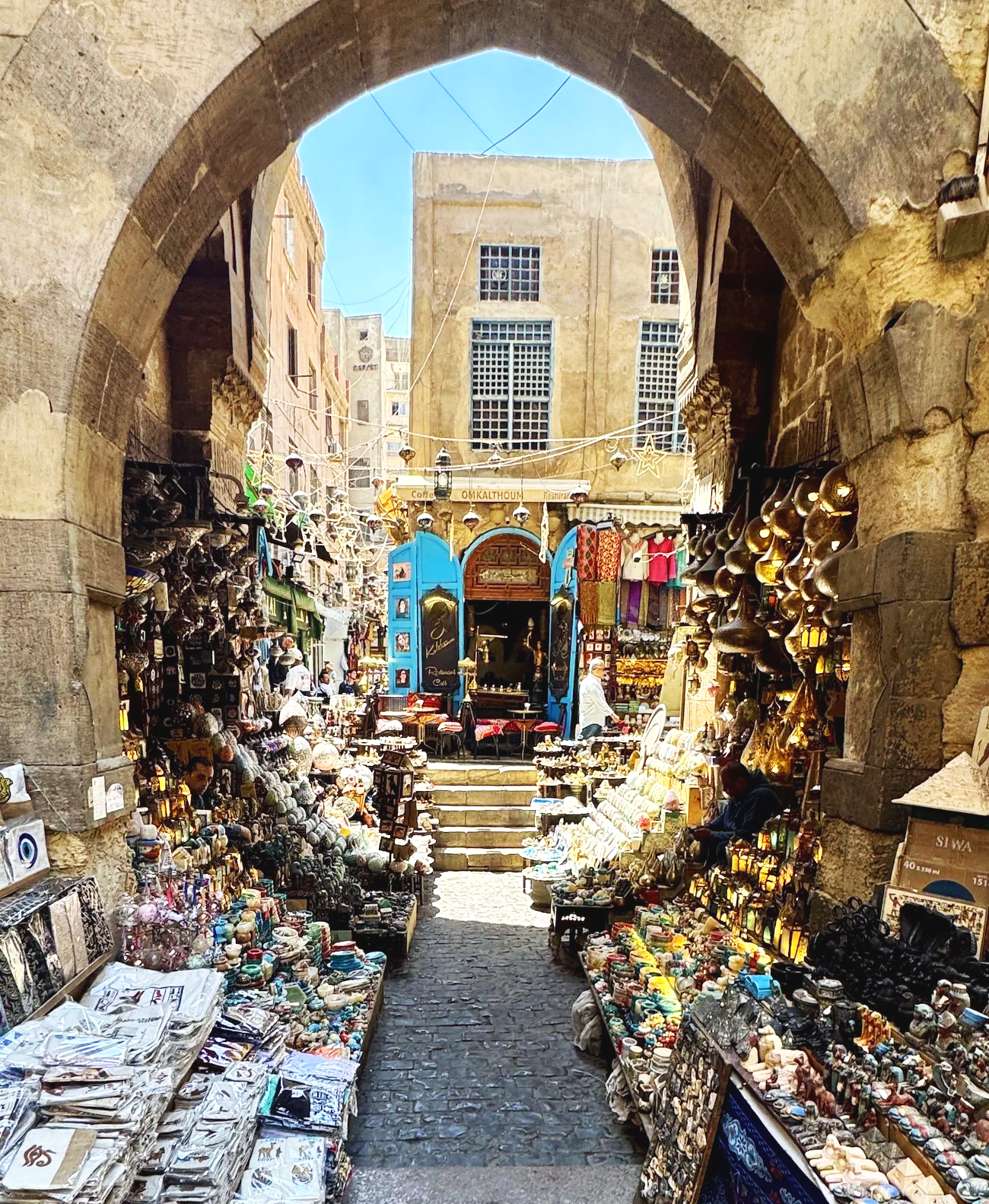
Khan el-Khalili Market, Cairo
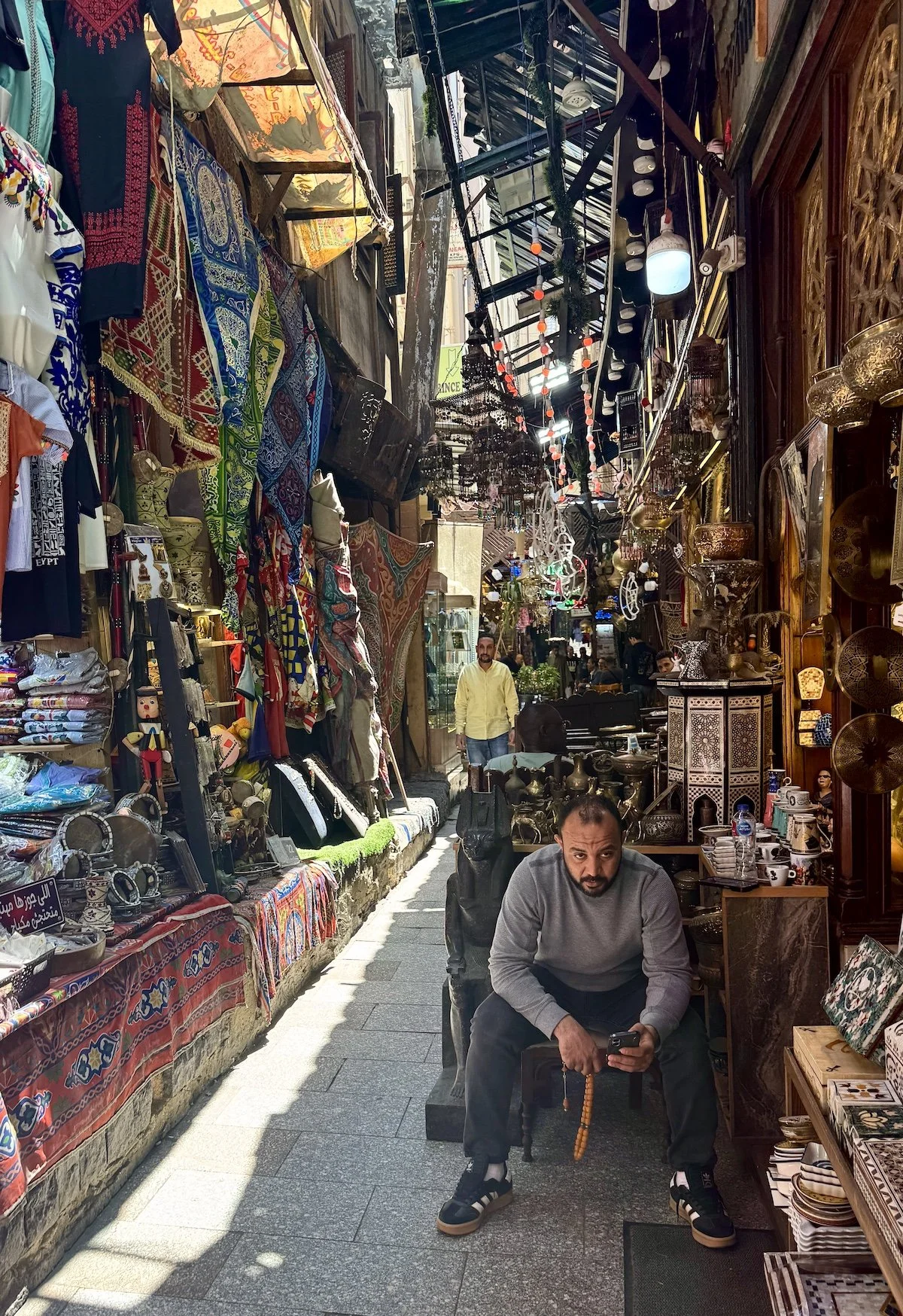
Vendor in Khan el-Khalili Market, Cairo
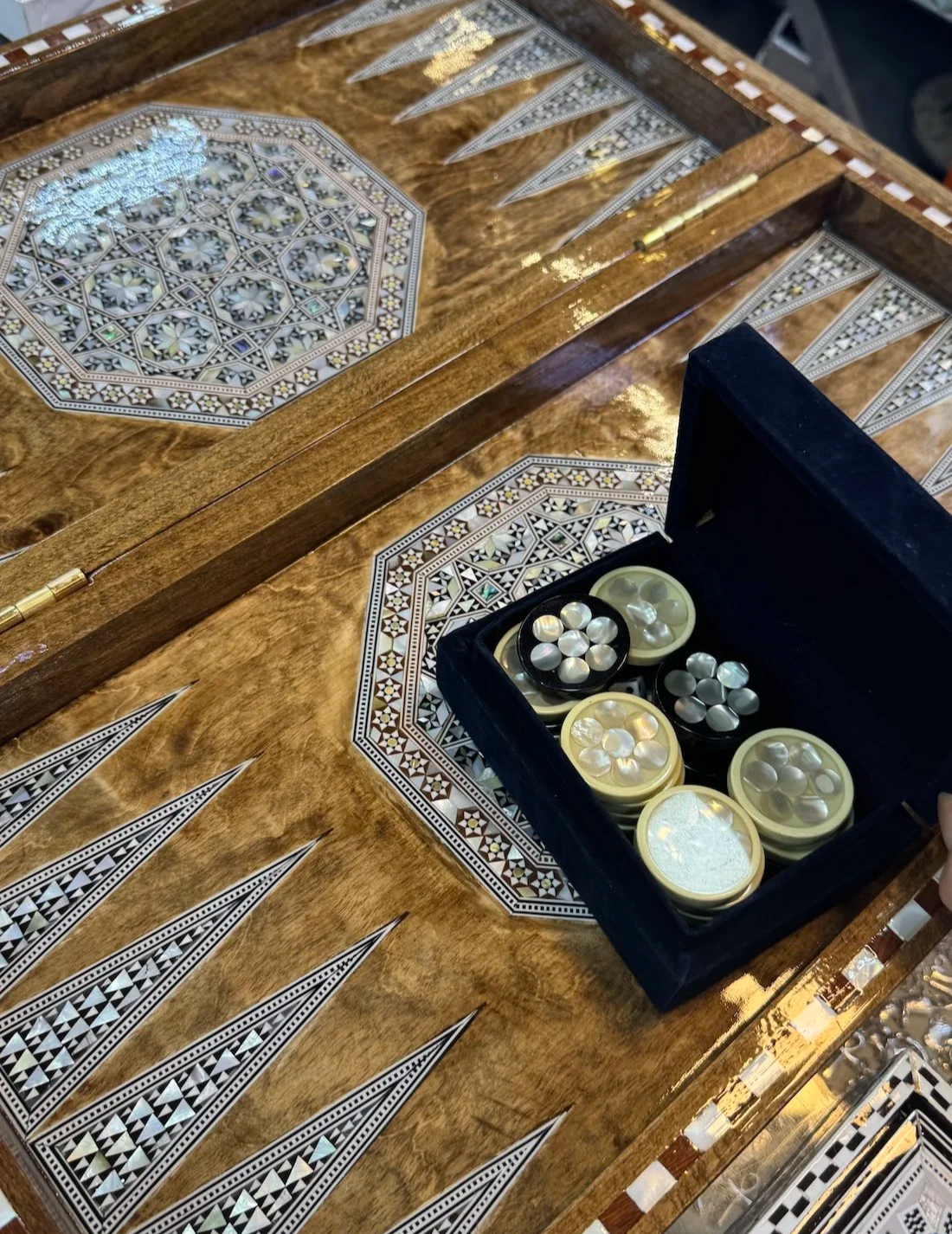
A maze of winding alleys, color, and chaos. Gold, lanterns, scarves, and things you didn’t know you needed until you touched them. Remember to bargain hard. It’s part of the culture. My purchase… this beautiful backgammon set.
Shopping Malls, Cairo
For fixed pricing (sorta) head to places like Citystars Mall or modern retail centers across the city.
What to Buy in Egypt
Essential oils (buy from specialist stores)
Spices (quality matters)
Alabaster vases and trinket boxes
Leather goods and textiles
Egyptian cotton
Skincare: tretinoin is widely available over the counter at a fraction of UK/US prices
Best Time to Visit Egypt
If you take one piece of advice from this guide, let it be this: Do not visit Egypt in the summer. The heat is intense and can make even the most incredible sites difficult to enjoy. The best time to visit Egypt is from October to April, when temperatures are far more manageable.

Tips for Visiting Egypt (The Real Stuff)
Cairo is intense—but that’s part of the magic. Lean into it
Start early—before the heat and crowds
Hydrate constantly and wear SPF
Dress light, breathable, and respectful
Tipping is part of the culture
Expect to be approached—stay polite but firm
Shopping in the markets—negotiate HARD
Never go into a backroom. There are no better Gucci handbags hiding there.
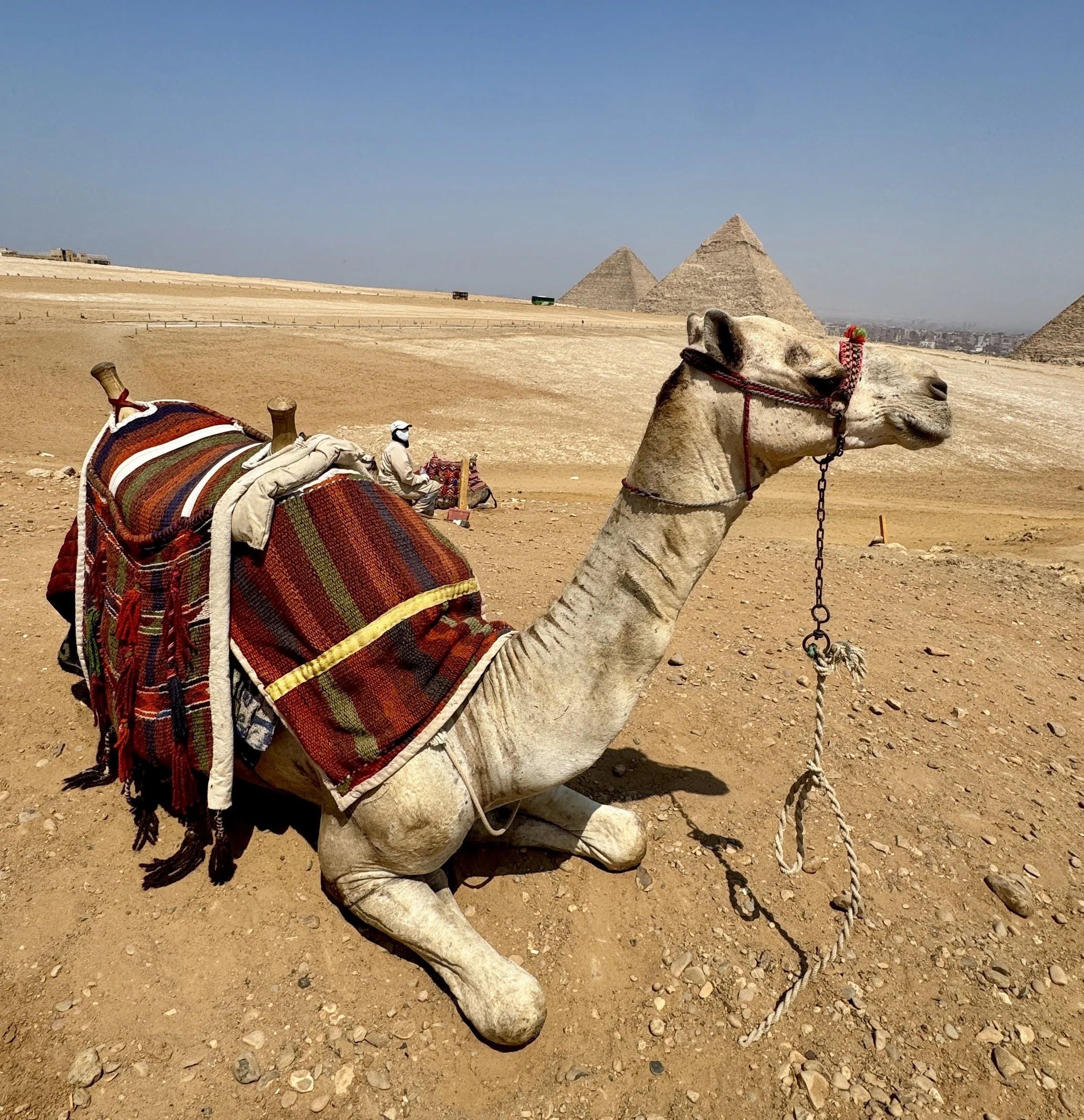
It may be free to get on a camel, but it’s going to cost you 10x to get off. Make a deal upfront. Nothing is free.
Some places charge extra for photos or toilets so carry small bills.
Traffic is theatrical—cross with locals
The Nile cruise is your reset
Egypt is still very much a smoking country. If needed, request a non-smoking hotel room.
Local spirits and wine are inexpensive, imported ones are not. Drink local.
Use GPS, carry a phone charger, and ChatGPT translates in realtime and is adorable talking in Arabic.
Hire a guide—it transforms everything. Shout out to Ayman Riad. DM me and I will introduce you. Yes, he was that good.
Final Thoughts
Egypt surprised me. It challenged me, overwhelmed me, and completely captivated me. This isn’t just a holiday. It’s perspective. It’s scale. It’s history that refuses to stay in the past.
If you’re even considering it—go. It’s a bucket list experience if ever there was one.